


The rapid advancement of AI in healthcare presents unprecedented opportunities for ABA organizations to streamline administrative tasks and improve clinical workflows. However, this technological shift also introduces critical responsibilities. The Council of Autism Service Providers (CASP) has published the Practice Parameters for Artificial Intelligence Use in Applied Behavior Analysis, outlining essential guidance for ABA organizations to ethically integrate AI. Concurrently, the Centers for Medicare & Medicaid Services (CMS) released its State Medicaid and CHIP Applied Behavior Analysis Toolkit in August 2026, reinforcing the need for rigorous documentation standards. For ABA practice owners and clinical directors, successfully navigating this intersection of innovation and compliance requires a strategic approach to AI adoption.
Strategic AI Selection for ABA: Meeting CASP Governance Standards
CASP’s guidelines underscore that ABA organizations must adopt structured governance practices to maintain compliance, fulfill payer obligations, and ensure responsible oversight. Effective AI integration begins with a clear assessment of an organization's specific operational and clinical challenges. Organizations should align their priorities with the technology under consideration, selecting tools that directly address organizational pain points. For example, organizations seeking to improve clinical documentation quality may benefit from AI-assisted tools that identify potential documentation issues and provide feedback for clinician review.
Furthermore, CASP emphasizes the necessity of transparency and accountability. Before deploying AI, practice leaders must understand how these systems operate, process sensitive patient information, and generate outputs. To mitigate risks, organizations are advised to establish robust protocols for ongoing monitoring, periodic auditing, and clear error-reporting mechanisms. This proactive oversight helps organizations identify potential risks, promote responsible AI use, and maintain appropriate clinical oversight.
Aligning AI with the CMS ABA Toolkit for Medical Necessity and Compliance
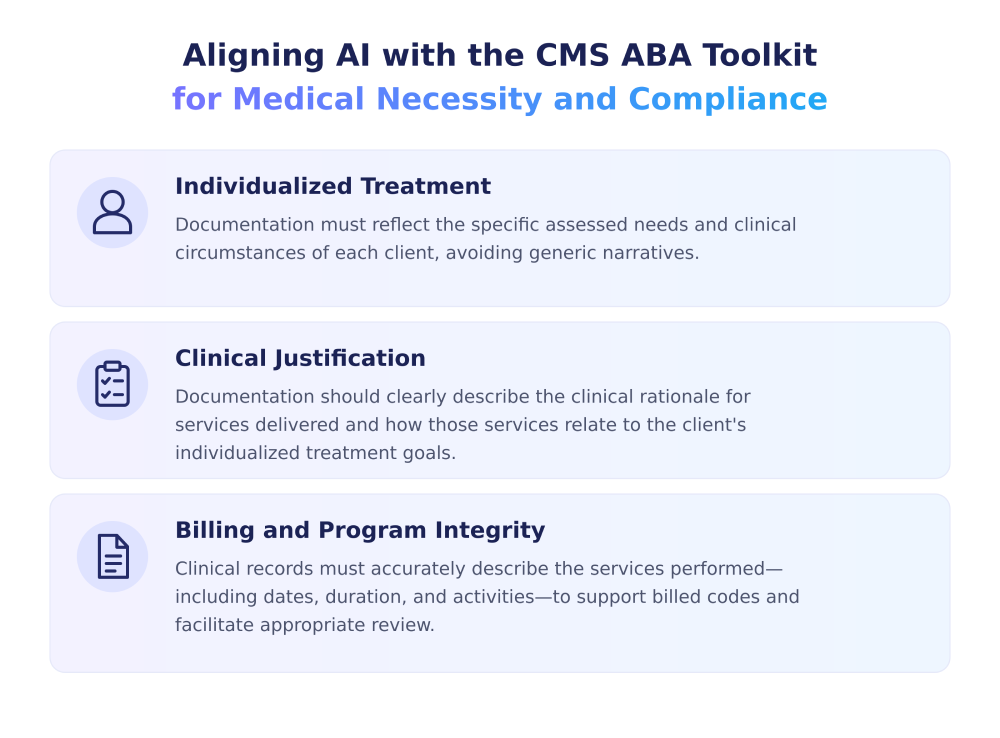
The recent CMS ABA Toolkit serves as a vital companion to CASP’s parameters, focusing heavily on strengthening the oversight of ABA services. While the toolkit does not impose new federal regulations, it clearly delineates the expectations for high-quality care and documentation. The toolkit highlights several important considerations for clinical documentation and program integrity, including:\
- Individualized Treatment: Documentation must reflect the specific assessed needs and clinical circumstances of each client, avoiding generic narratives.
- Clinical Justification: Documentation should clearly describe the clinical rationale for services delivered and how those services relate to the client's individualized treatment goals.
- Billing and Program Integrity: Clinical records must accurately describe the services performed, including dates, duration, and activities, to support billed codes and facilitate appropriate review.
These CMS priorities highlight an important opportunity for ABA organizations to leverage AI-assisted tools to identify potential documentation issues, improve consistency, and support more effective clinical documentation review processes.
Streamlining ABA Documentation: How Theralytics Aligns with CASP and CMS
At Theralytics, AI is designed to empower clinicians and reduce administrative burdens without ever supplanting professional clinical judgment. Theralytics' AI-powered features integrate seamlessly into existing workflows, reflecting CASP's recommendation that technology should complement daily clinical activities.
Theralytics supports practice owners in maintaining clinical and billing integrity through two primary features:
AI Narrative Summary: Reducing the Clinical Documentation Burden
This tool utilizes data collected during a session to assist clinicians in generating narrative summaries. By translating raw data into structured text, it significantly reduces the time spent on manual documentation. Clinicians retain full responsibility for reviewing, modifying, and finalizing the content to ensure it accurately reflects the services provided, perfectly aligning with CASP’s mandate for human oversight.
AI Note Review: Helping Improve ABA Session Note Quality
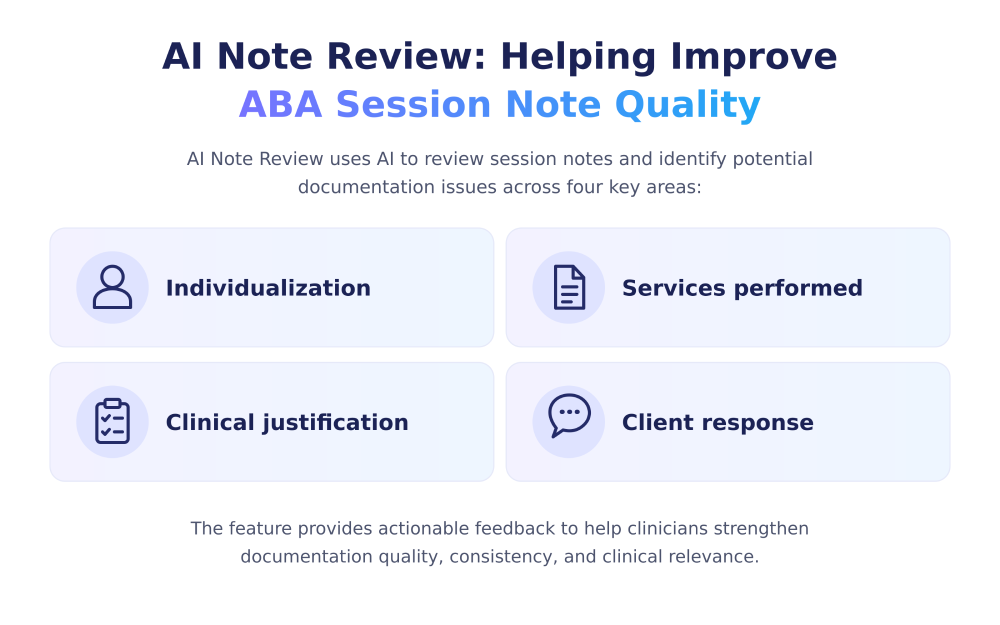
Designed to support the documentation quality principles emphasized in the recent CMS toolkit, AI Note Review uses AI to review session notes and identify potential documentation issues across four key areas: individualization, services performed, clinical justification, and client response. The feature provides actionable feedback to help clinicians strengthen documentation quality, consistency, and clinical relevance.
By adopting AI solutions that prioritize transparency, clinical accountability, and seamless workflow integration, ABA practice owners can effectively scale their operations. Theralytics directly assists in this transition by offering practical, purpose-built tools like AI Narrative Summary and AI Note Review that directly embody CASP’s governance principles and CMS’s documentation standards. Thoughtful implementation of these tools ensures that organizations reap the efficiency benefits of AI while maintaining complete clinician oversight, safeguarding billing integrity, and upholding the highest ethical standards in patient care.