


Running an ABA practice means juggling authorization windows, therapist schedules, payer-specific billing rules, and clinical documentation all at once. General tools weren't built for this. Knowing which features of ABA practice management software your practice genuinely needs, whether you're a solo BCBA or managing a multi-location operation, is what separates software that actually helps from software that piles on more work. The ABA practice management software built by BCBAs at Theralytics addresses the operational layers that generic tools miss entirely.
The U.S. ABA software market was valued at $456 million in 2024 and is projected to reach $960 million by 2032, growing at an 11.22% CAGR, according to Verified Market Research. That growth reflects real operational demand. Practices across the country are reaching for purpose-built platforms because the administrative load of ABA simply can't be managed in spreadsheets anymore.
What to Look for in ABA Practice Management Software
ABA therapy comes with a distinct mix of pressures: rotating therapist schedules, service types ranging from 97153 direct therapy to 97155 protocol modification, multi-payer authorization tracking, and HIPAA obligations on every clinical record. General-purpose tools handle none of this well. Not even close.
A solo practice with two or three therapists needs different depth than a 50-therapist multi-location clinic, but both need the same foundational modules: scheduling, billing, documentation, and compliance. The difference is scale and configurability. Platforms worth your time cover all of these without requiring you to bolt on separate tools. Market research from Mordor Intelligence, Business Research Insights, Wise Guy Reports, Market Research Intellect, Verified Market Reports, and Grand View Research all point to the same driver: integrated, single-platform architecture is what practices are prioritizing, not separate modules that don't talk to each other.
1. Integrated Scheduling and Appointment Management
ABA schedules are structurally more complex than most outpatient therapy models. Complexity compounds fast. You're coordinating multiple therapists across different service types, each carrying its own session frequency, authorization window, and credential requirement that must stay current without exception. Crucially, the system must also track and validate RBT supervision requirements in real time, ensuring that the necessary percentage of an RBT’s monthly hours are overlapped by a BCBA. A missed conflict or an expired authorization isn't just an inconvenience. It's a billing denial waiting to happen.
Effective ABA scheduling software connects appointment creation directly to the payer and clinical record, so every booking gets validated before it's confirmed, including bulk rendering and canceling appointments at scale when schedules shift across your roster. That connection matters enormously. It's what separates a scheduling tool from a scheduling system, because validation at the point of booking stops errors before they reach the claim. According to a Stax market overview, demand for autism and ABA therapy services is growing faster than supply, which means scheduling errors compound quickly as caseloads grow.
Authorization Tracking and Approved Hours Monitoring
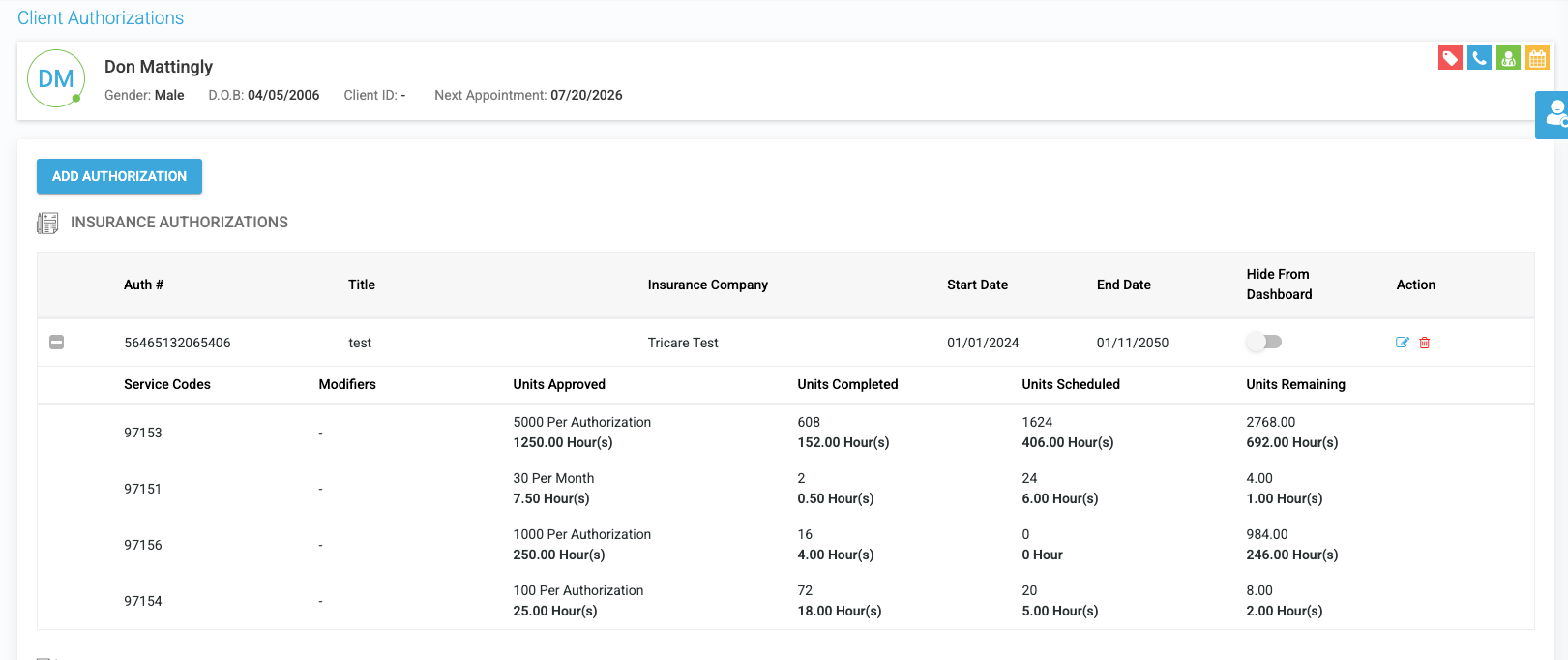
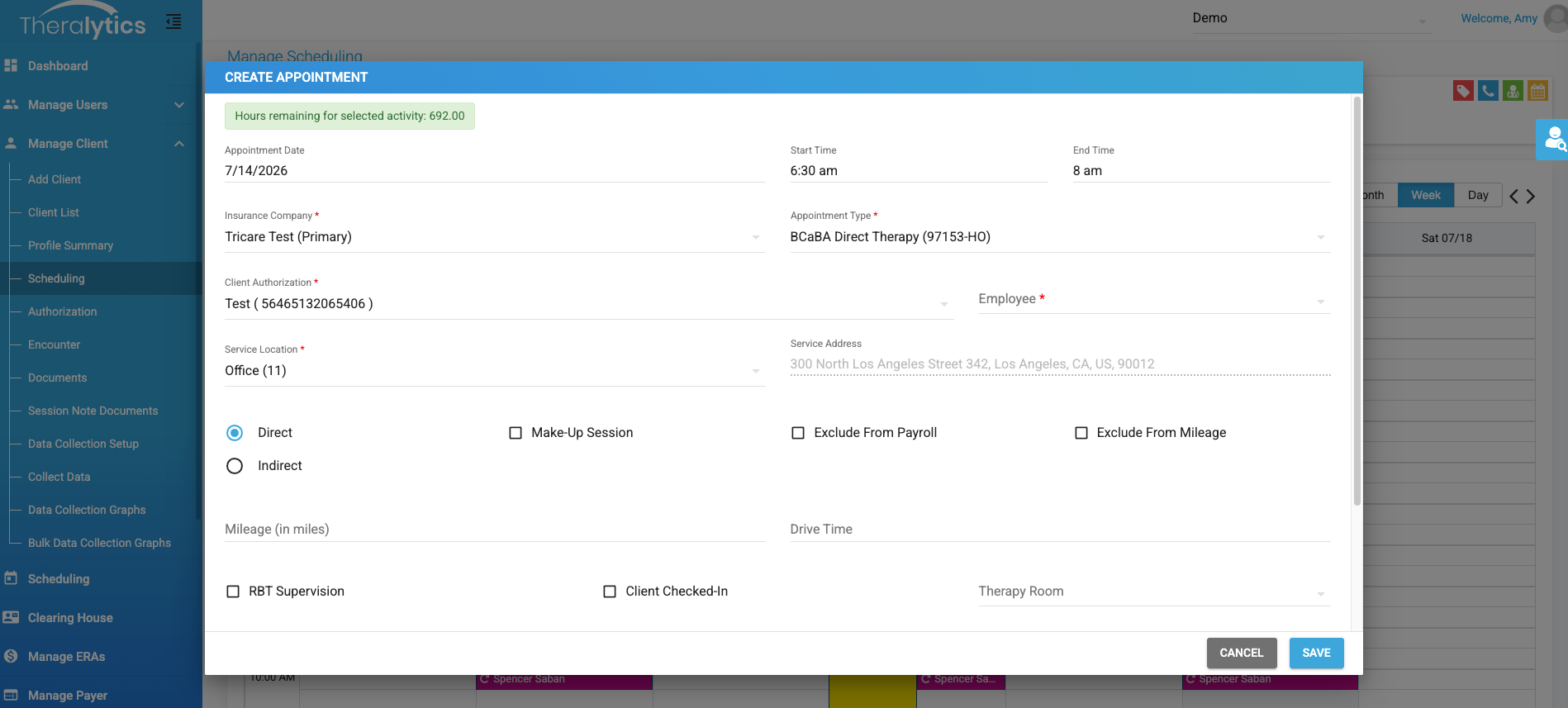
Authorization tracking should live inside your scheduling workflow, not in a separate spreadsheet. By embedding this process, you ensure that every approved hour is fully utilized, maximizing your staff’s billable potential and delivering the complete scope of recommended care to your clients. The software must pull approved units from the client's authorization record automatically, monitor remaining balances session by session, and alert your team before a client approaches the approved limit. Platforms that support authorization tracking and approved hours monitoring make this utilization visible in real time. This transparency guarantees you aren't leaving authorized hours on the table, while simultaneously preventing overbilling outside authorized date ranges, which is one of the most common audit triggers in ABA.
Conflict Detection and Scheduling Alerts
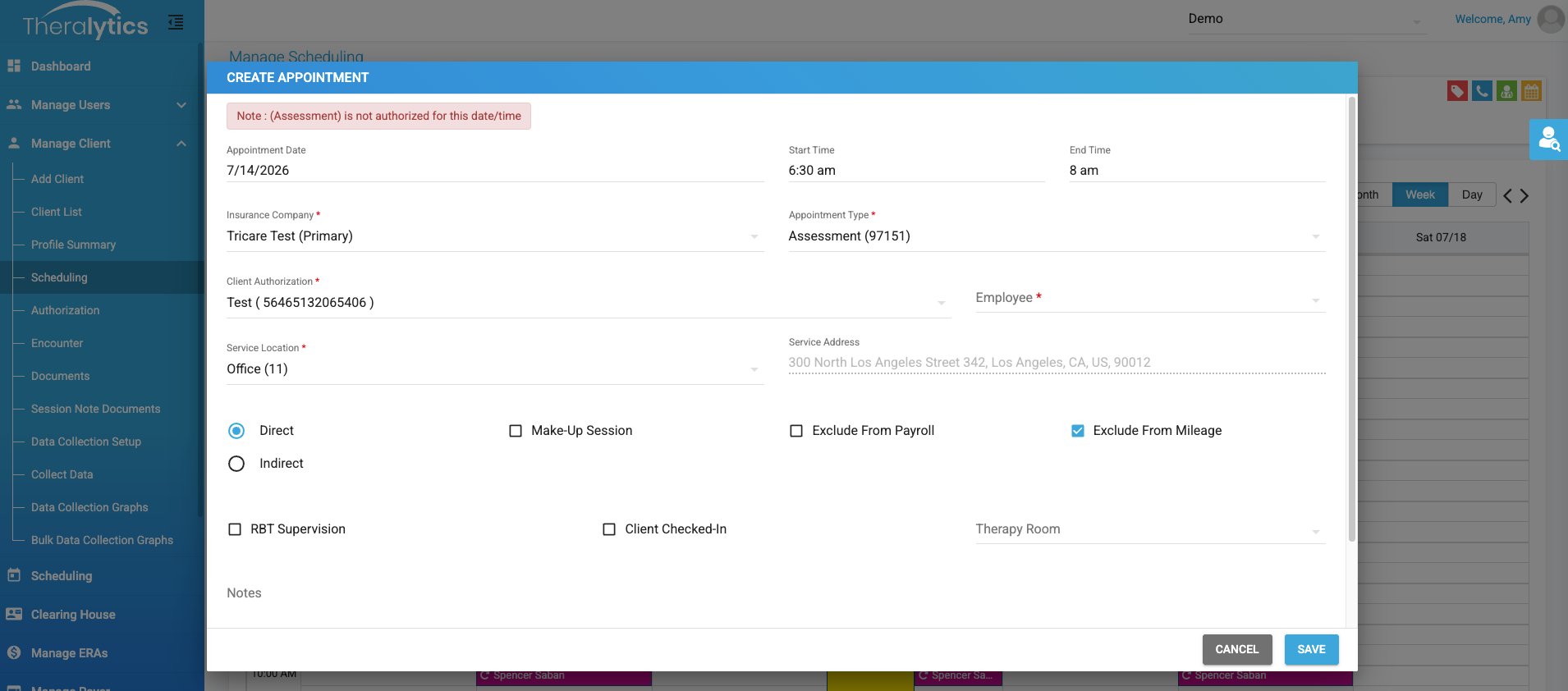
Part of the practice management portion of a system should have a robust scheduler that features automated, real-time conflict detection to catch scheduling errors at the point of entry. Instead of relying on manual oversight, the software instantly flags critical scheduling issues such as double-booked therapists, missing or expired credential requirements, session-type mismatches, and CPT codes that lack sufficient authorized units or approval. This occurs the moment a scheduler attempts to log an appointment.
By embedding these validation checks directly into the scheduling workflow, proactive alerts hit the coordinator's screen before the appointment is finalized and saved. This immediate feedback loop shifts error prevention to the front end of the operational pipeline. Ultimately, it eliminates the costly and inefficient practice of discovering billing, compliance, or scheduling blunders weeks after the fact when a claim comes back denied or an audit flag is raised.
2. Automated Billing and Insurance Claims Processing
ABA billing requires CPT-code-level precision. Codes like 97151, 97153, 97155, and 97156 each carry distinct credential requirements, unit structures, and payer-specific rules, and one misconfiguration in your billing setup creates a ripple of rejections. The behavioral health EHR software market is projected to reach $14.22 billion by 2034 at a 14.85% CAGR, according to Towards Healthcare, driven largely by demand for documentation and billing tools that cut claim errors at scale.
Theralytics' automated billing and insurance claims processing handles claim submission, denial follow-up, and payment posting in a single workflow. One workflow. The platform's billing feature supports payer-specific configuration for rendering provider requirements, modifier mapping, and Tricare or EPSDT referral tracking across every claim type your practice generates. Practices using Theralytics' ABA billing service pay just 4.5% of receivables once paid and receive 50, 100% discounts on the practice management software, aligning billing fees directly with revenue collection. If you're weighing your options, the best ABA billing software comparison runs the major platforms against these exact criteria.
Real-Time Eligibility Verification
Running eligibility verification before a session starts prevents a substantial share of front-end claim rejections. Rather than relying on manual auditing, the software should automatically track active coverage, authorization status, and specific benefit limits in real time. This proactive verification eliminates the friction of manually having to reach out to the payer and ensures that every scheduled hour remains fully reimbursable.
Claims and Clearinghouse Integration
Claims flow through clearinghouses like Office Ally and ClaimMD, with status flags at every step: submitted, accepted, rejected, or paid. Nothing disappears into a black hole. The submitted claims guide covers how status tracking and clearinghouse integration work together to keep payment reconciliation current regardless of payer behavior. Electronic remittance advice (ERAs) posts automatically, while manual EOBs post where ERA enrollment isn't available, and automated billing and insurance claims processing ensures secondary claims transmit electronically with primary adjudication data pre-populated, eliminating most of the manual secondary billing work your team is probably still doing.
3. Real-Time Clinical Documentation and Progress Tracking
Fewer than 25% of behavioral health facilities use an EHR exclusively, according to Aptarro's 2026 EHR adoption data. That gap means most practices are still stitching together paper notes, spreadsheets, and disconnected apps, creating documentation delays and real audit exposure.
Purpose-built ABA documentation management software centralizes session records, treatment plans, and caregiver documents in one HIPAA-compliant location. Everything connects. Pair that with a solid data collection solution and your clinical team has a complete picture at every supervision meeting without hunting across disconnected systems. The best ABA data collection software supports frequency, duration, interval, and task-analysis recording methods all within the same platform.
Real-Time Data Entry for RBTs and BCBAs
Capturing clinical data at the point of care fundamentally improves record accuracy and accelerates clinical velocity. By equipping RBTs with offline-capable mobile data collection, practices eliminate the inherent inaccuracies of post-session recall and drastically reduce documentation latency. Centralizing this real-time progress tracking within the platform grants supervising BCBAs immediate visibility into daily outcomes. This uninterrupted flow of clinical data allows supervisors to dynamically adjust treatment protocols and monitor client progress in real time, rather than waiting for end-of-day narrative notes to be submitted.
Mobile Access for Clinicians in the Field
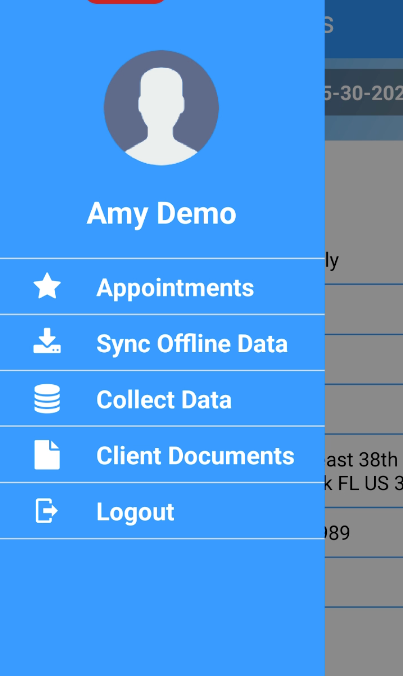
Community-based and in-home sessions account for a large portion of ABA service delivery. Therapists working in those settings often don't have reliable internet access. If data entry depends on connectivity, documentation happens hours later from memory, and accuracy suffers for it.
Data from 3 Pie Squared on ABA staff turnover ties documentation burden directly to therapist burnout. Offline mobile access removes a major source of that burden. The Theralytics mobile app, available on iOS and Android, supports full offline data collection, session timers, GPS-verified signatures for EVV compliance, and automatic syncing when the device reconnects. Mobile access isn't just a convenience feature. It's a retention and clinical quality tool, cutting end-of-day documentation backlogs that erode both accuracy and staff satisfaction.
Automated Graphing and Progress Visualisation
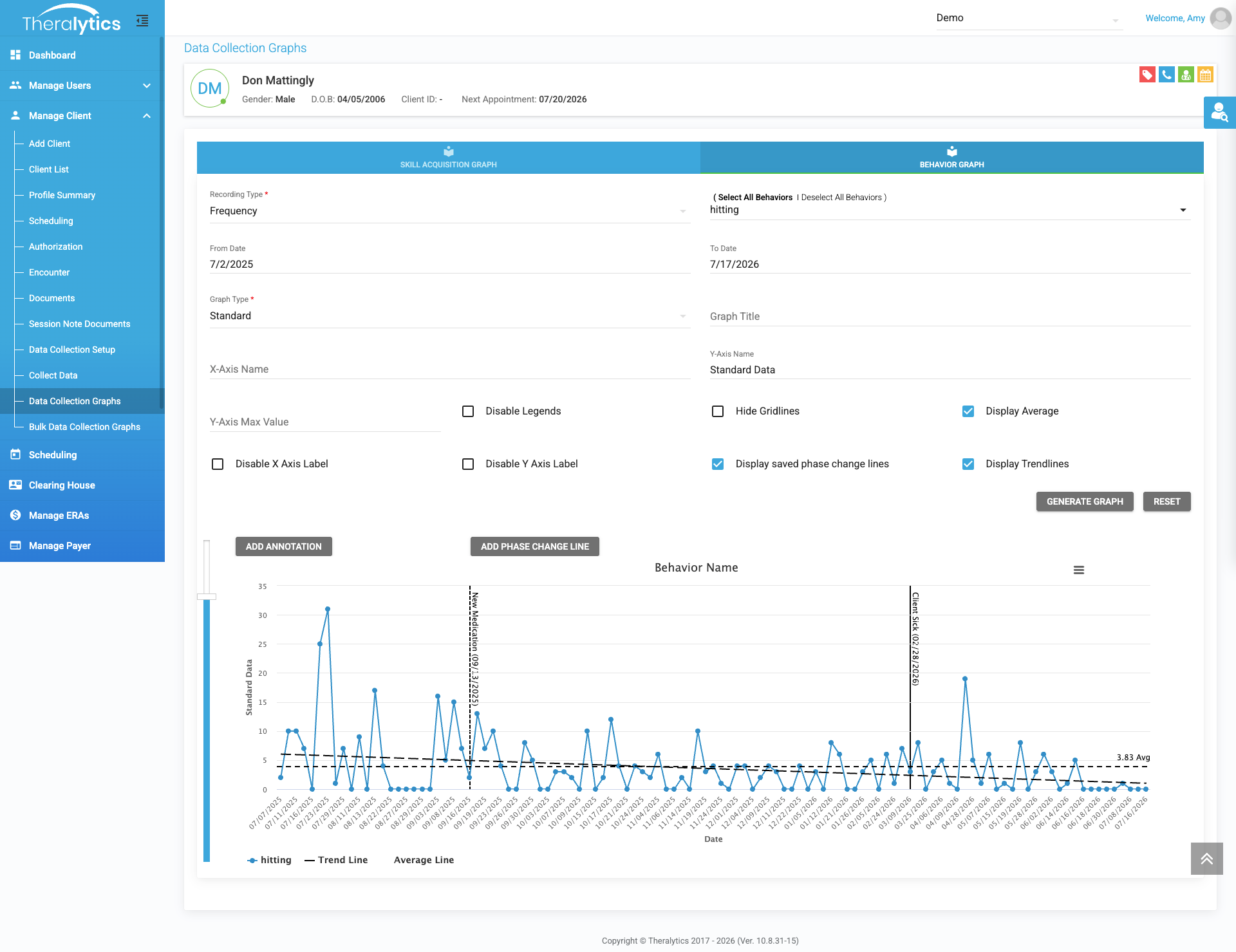
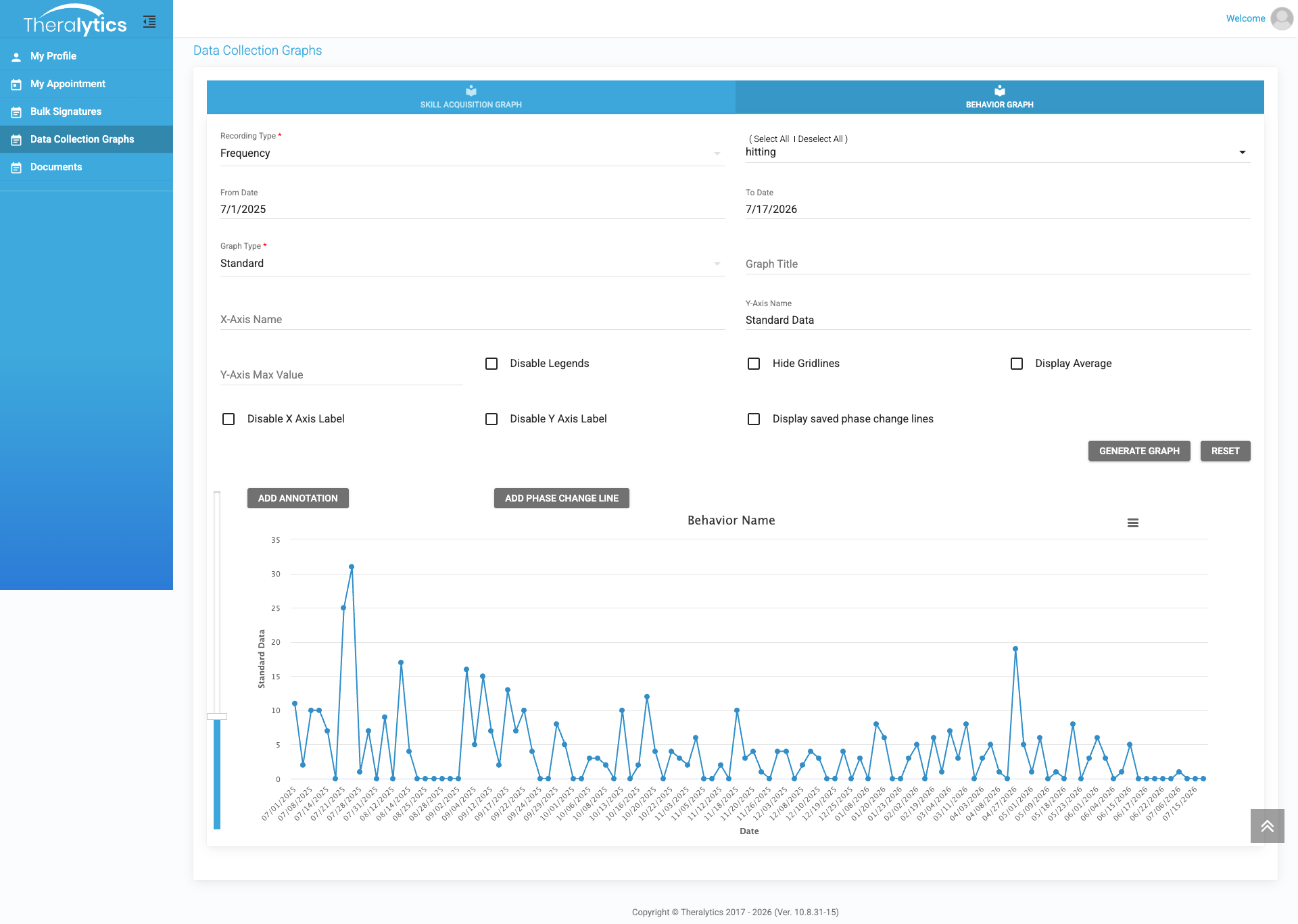
Raw trial counts mean little without context. Automated graphing converts session data into visual progress curves that BCBAs can review in supervision and share with caregivers, no Excel required. Trend breaks, plateau indicators, and mastery criteria are visible at a glance.
Standardized Session Notes and BCBA Sign-Off Workflows
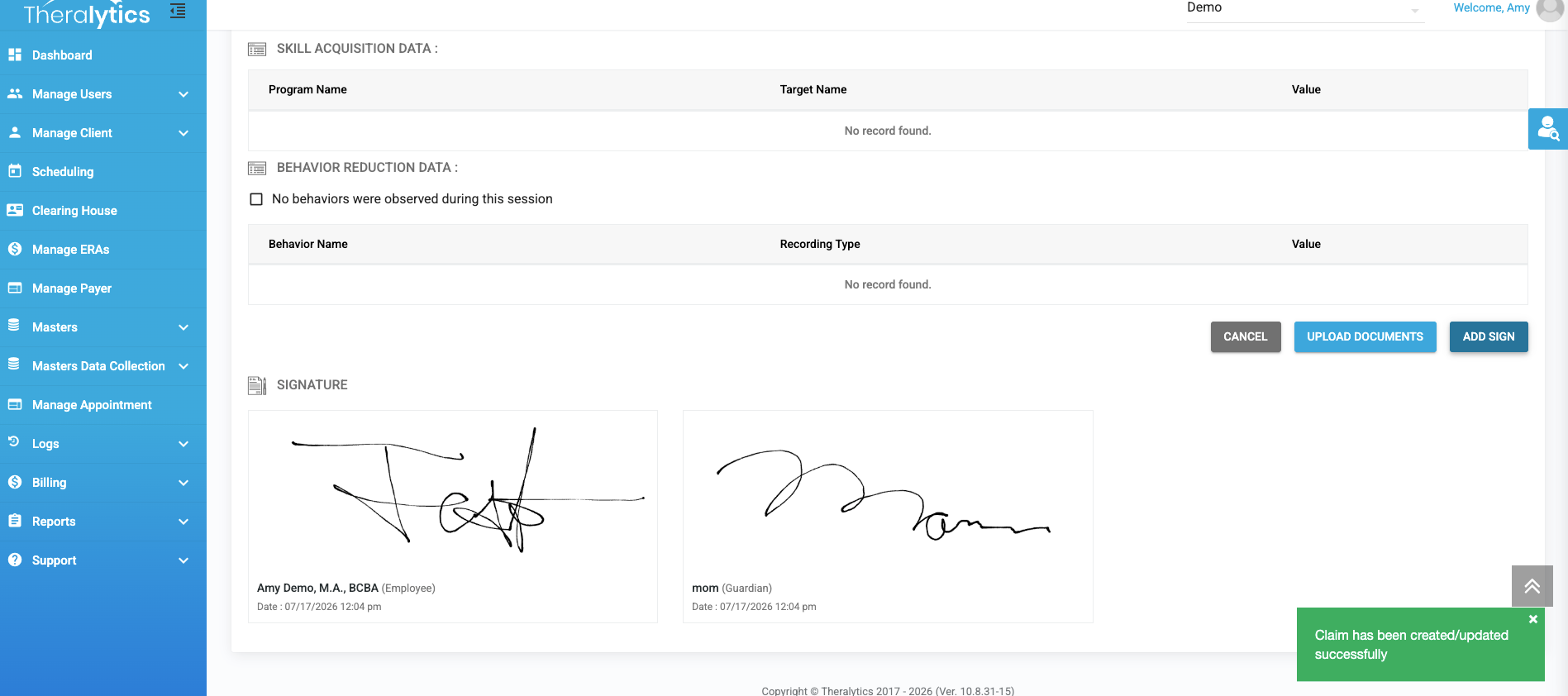
By automating compliance at the point of care, a platform should eliminate the bottleneck of manual documentation and protect your practice from costly billing audits. Standardized note templates are hardcoded and tied directly to each individual CPT code, ensuring that RBTs document exactly what payers require during every session without the guesswork. To further streamline the process, having a software with intelligent AI generates narrative summaries by instantly transforming raw session data into high-quality, professional clinical notes. Because insurance requirements vary, the platform should offer the flexibility to customize session notes to meet each payer's specific criteria. Once the session ends, having a streamlined workflow from session note completion to claim creation creates a seamless transition that drastically cuts documentation lag from days down to hours, accelerating your reimbursement cycle and allowing clinicians to focus more on care and less on screens.
4. HIPAA-Compliant Data Security and Backup
ABA records contain protected health information (PHI) spanning clinical assessments, behavioral data, session notes, and billing records that collectively represent significant legal exposure. One breach is enough. HIPAA violations carry financial penalties and reputational damage that most practices simply can't absorb, making platform-level compliance architecture a non-negotiable requirement rather than a nice-to-have feature. The Mordor Intelligence behavioral health EHR market report identifies compliance pressure as a leading driver of platform adoption across behavioral health.
Theralytics holds SOC 2 Type II certification with no exceptions, is ONC Health IT certified, and applies AES-256 encryption with mandatory multi-factor authentication. When evaluating whether HIPAA-compliant software needs SOC 2 Type II certification, the platform's security architecture and privacy policy are publicly documented. Theralytics' SOC 2 Type II audit was completed with no exceptions by independent cybersecurity auditor A-LIGN, and its ONC Health IT certification was independently verified by Drummond Group, confirming that the platform meets federal standards for functionality, security, and interoperability. For a closer look at why this matters operationally, the guide on cybersecurity for ABA practices covers the threat profile for small and mid-size behavioral health organizations specifically.
Secure Access Controls and Role-Based Permissions
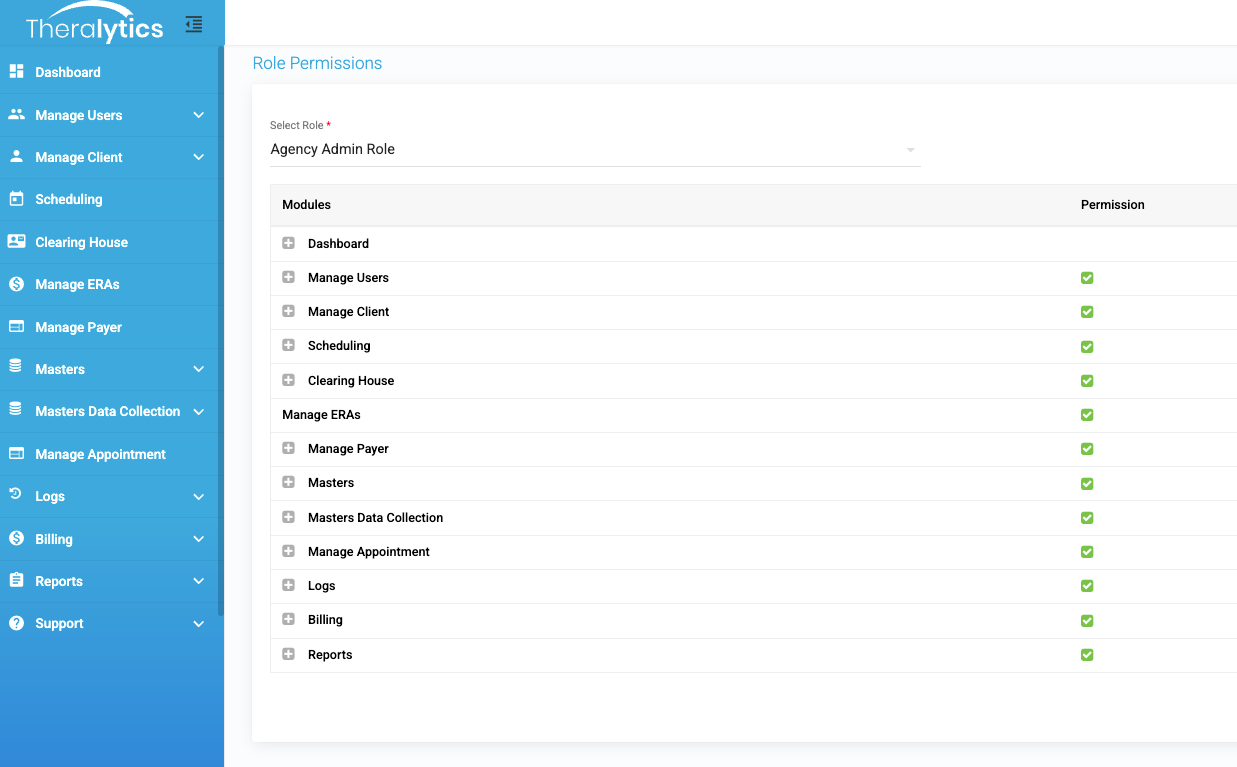
Role-based permissions ensure that RBTs see only their clients, billing staff see financial records, and supervisors see everything within their assigned caseload. Audit trails log every access event, so when a payer review or HIPAA audit arrives, your practice can demonstrate compliance without scrambling.
Compliant Electronic Health Records Management
Compliant EHR management means automated expiration tracking on credentialing documents, HIPAA-compliant document storage accessible from any device, and backup processes that guarantee data recovery. Audit readiness isn't a one-time project. It's an ongoing system state.
5. Multi-Location and Staff Management Capabilities
Scaling from one clinic to multiple locations creates coordination headaches that single-site tools can't solve: therapist assignments across locations, payroll calculations across different session types, credentialing renewals that slip through the cracks. A solid resource on workforce operational efficiency for ABA clinic teams puts billable utilization rate targets at 65% to 85% for RBTs, a metric that's nearly impossible to track without integrated timesheet data. The Towards Healthcare behavioral health EHR market report projects this segment to reach $14.22 billion by 2034, driven partly by multi-site operational demand. Platforms that support multi-location and staff management capabilities, including assigning staff to specific teams and locations, make this coordination manageable at scale.
Timesheet Tracking and Payroll Synchronisation
Timesheet data should pull directly from completed sessions, converting clinical hours into payroll-ready records without anyone re-entering numbers by hand, and platforms that support timesheet tracking and payroll synchronisation give administrators accurate labor cost data alongside billing revenue, both in one place. That removes a common error source and makes labor cost reporting far more reliable.
Credentialing Alerts and Certification Management
Credentialing alerts notify administrators when BCBA certifications, RBT credentials, or insurance enrollments are approaching expiration. At 20-plus staff, tracking renewals manually is a genuine compliance liability. The system should flag expirations 30, 60, and 90 days out automatically, not wait for someone to notice.
6. Parent and Caregiver Portals
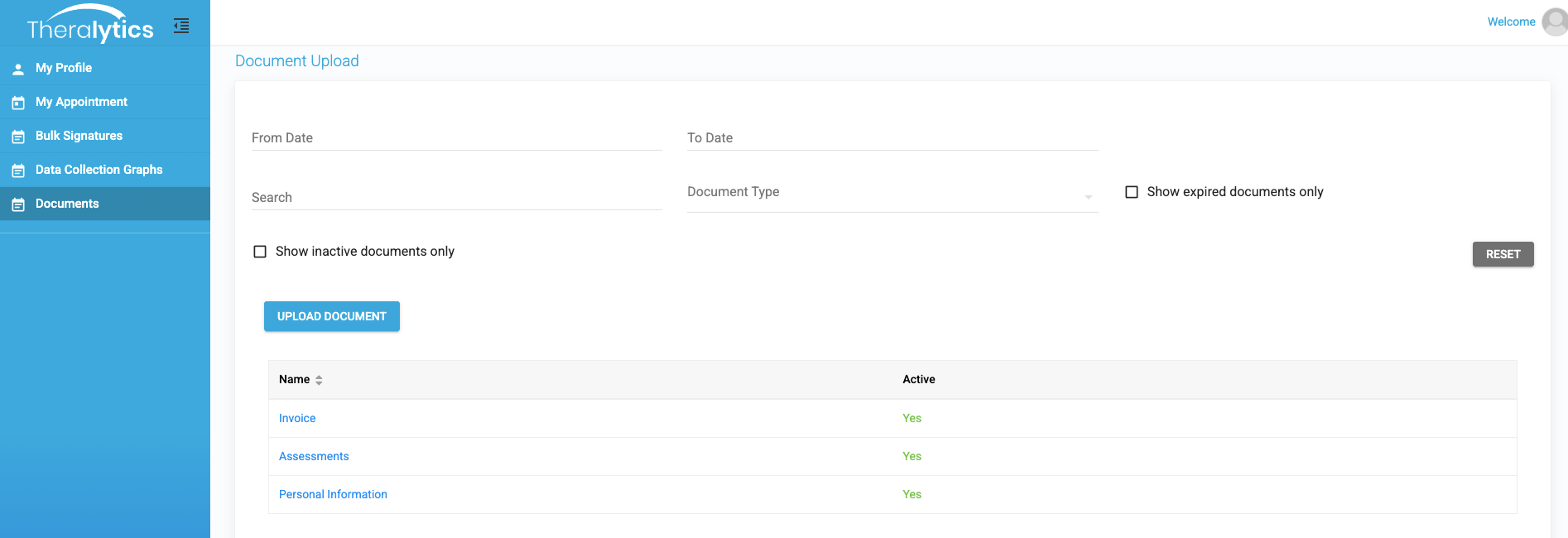
Caregiver involvement between sessions is one of the clearest predictors of treatment consistency in ABA. A parent portal gives families access to session notes, progress graphs, and treatment goals without requiring staff to send manual updates every week.
Electronic Document Signing and Secure Messaging
Parents can review and sign consent forms, treatment plans, and service agreements electronically through the portal. That cuts out the back-and-forth over paper documents and creates a timestamped signature record that satisfies HIPAA documentation requirements.
Parent Access to Session Data and Treatment Progress
When caregivers can see exactly what was worked on in a session and how their child performed, they're better positioned to reinforce goals at home. That continuity, between clinic and home, directly supports treatment generalization.
7. Customizable Reporting and Analytics
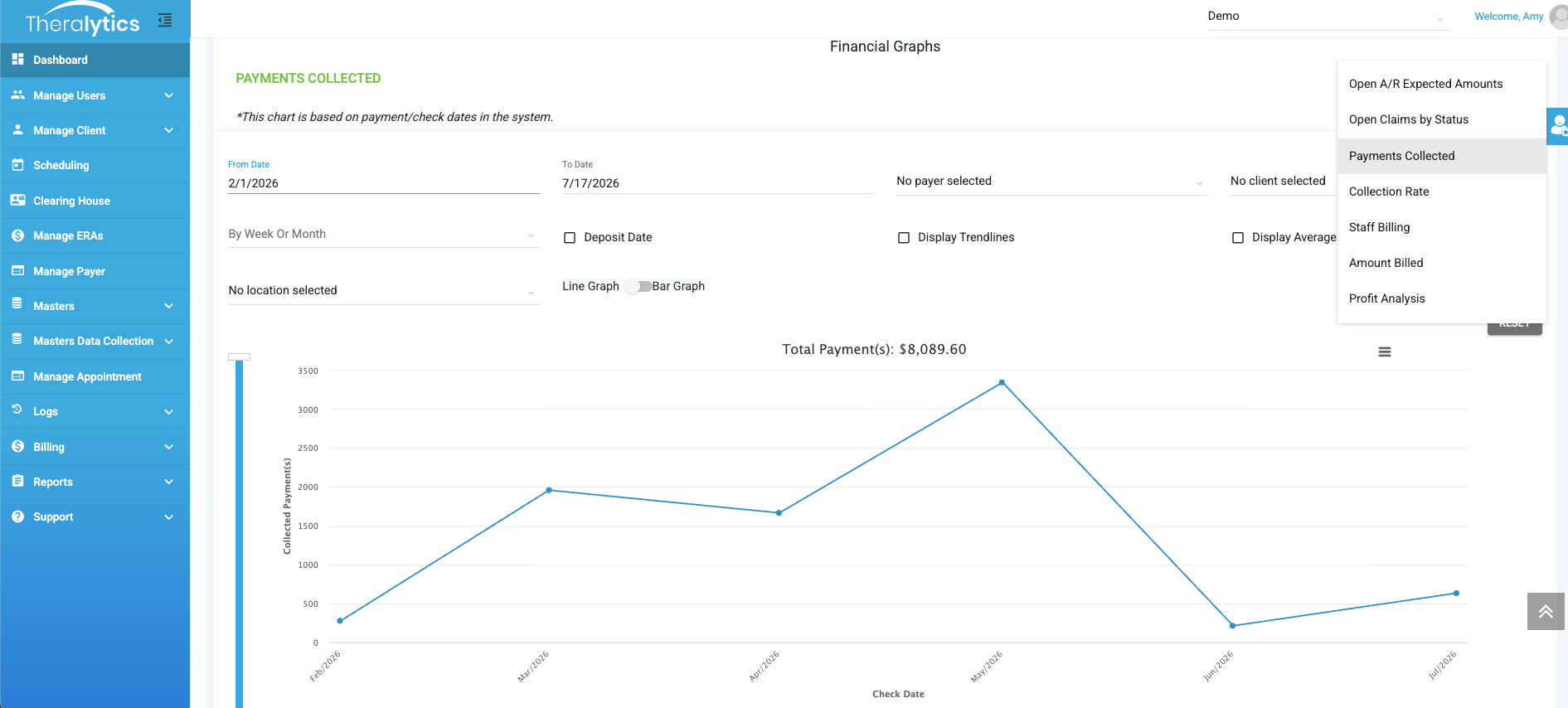
Reports shouldn't require a data analyst to generate. Your billing team needs accounts receivable aging and denial-rate breakdowns. Your BCBAs need clinical outcome trends by goal and by client. Practice owners need staff utilization and revenue per session type. And honestly, most practices need all three without custom configuration each time. A platform with customizable reporting and analytics for ABA practices produces all of that out of the box. According to Behave Health's 2026 behavioral health EHR review, configurable reporting is one of the top selection criteria cited by behavioral health administrators.
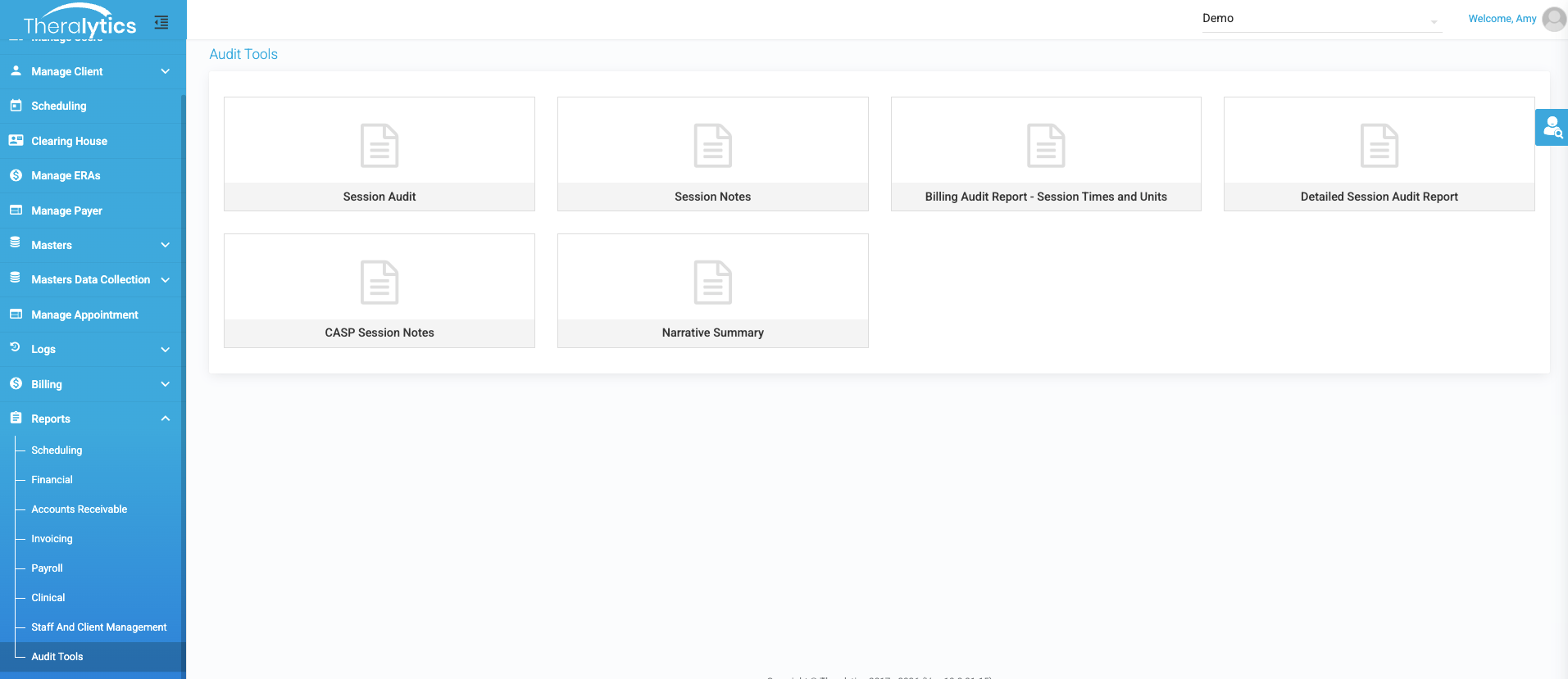
And when payer audits arrive, pre-built compliance reports that pull session notes, authorization records, and billing history by claim are far faster than rebuilding documentation from scratch. The Theralytics efficiency features guide shows how automated dashboards give practice owners a real-time financial and clinical snapshot without manual report pulls.
8. User-Friendly Interface with Minimal Training Required
Software that RBTs and BCBAs don't actually use isn't an asset; it's a sunk cost. Because clinical teams are not administratively focused, they will quickly default to familiar workarounds if a system feels slow, requires too many clicks for routine tasks, or offers a poor mobile experience. That friction is exactly how documentation gaps and billing errors creep back in, frequently causing practices to abandon management software mid-deployment. This adoption risk is severely amplified in an industry where ABA organizations averaged annual turnover rates between 77% and 103% in 2024, according to data cited by Sprypt.
High turnover means new staff must become productive fast. To eliminate this onboarding drag, a platform must feature an intuitive interface with a short learning curve. We eliminate the risk of software abandonment by providing comprehensive staff training and dedicated onboarding support throughout the entire process at absolutely no additional cost, ensuring your team is confident, proficient, and fully supported from day one.
9. Flexible Pricing and Scalability Options
Pricing models vary widely. Per-seat pricing works for small practices with stable staff counts. Per-client pricing scales proportionally as you add clients, which suits growing clinics. Flat-rate models can be economical at scale but punishing for smaller rosters. So understanding your growth trajectory before signing a contract matters just as much as the monthly cost.
A practice with three therapists doesn't need enterprise configuration, or enterprise pricing. But the features that work at three therapists, like manual scheduling and basic billing, often become bottlenecks at 20-plus. Theralytics' flexible pricing plans start free for new BCBA startups and scale at $20 to $30 per client per month, with no setup fees or hidden charges. According to Apploi's research on ABA therapist retention, affordability and ease of use both factor into whether clinical staff actually embrace new tools.
Choosing the Right Software for Your Practice
Start with your highest operational bottleneck. If billing denials are draining staff time, lead your evaluation with claims processing and eligibility verification. If documentation lag is creating compliance risk, prioritize data collection and session note workflows. Solo and small practices should confirm the pricing model doesn't penalize low client volume in early growth stages. Multi-location operations need to validate that scheduling, payroll, and credentialing data sync across sites without manual reconciliation.
One technical step most practices skip: confirming how the software integrates with your specific insurance payers. Not all clearinghouse connections are equal, and payer-specific configuration for Medicaid, commercial plans, and Tricare can make or break first-pass claim acceptance, so ask about that in any demo. The best ABA practice management software comparison and the BCBA founder's perspective on choosing software and evaluating platforms both walk through evaluation frameworks worth reviewing before you sign anything. Theralytics is built to cover all 10 features of ABA practice management software discussed here in a single system. Book a free 15-minute demo at theralytics.net to see how the platform fits your specific practice size and payer mix.
The Bottom Line
The right ABA practice management software connects scheduling, billing, documentation, and compliance in one system your clinical team will actually use. Practices that get this right spend less time on administrative work and more time on client outcomes. Evaluate platforms against the 10 features covered here, validate payer integrations before committing, and prioritize the features that address your most pressing operational gaps first.