


Key Takeaways
- Consolidated ABA practice management software unifies scheduling, billing, clinical data collection, and authorization tracking, eliminating data silos that cost practices billable hours every week.
- According to Camber Health's 2026 RCM report, 42% of ABA claim denials in 2025 were preventable at the pre-submission stage through better workflow controls.
- Authorization tracking, monitoring approved units, expiration dates, and linked service codes, directly prevents out-of-scope care delivery and reduces claim rejections.
- RethinkBH's 2025 survey of 390 BCBAs found that clinicians spend only 25% of their week on direct client care; administrative automation reclaims those hours.
- Three metrics, authorization utilization rate, claim denial rate, and billable hours per staff member, give ABA practices the earliest warning signs of operational and revenue problems.
Revenue, clinician time, and care quality all bleed away from the same root cause in ABA practices: tools that don't talk to each other. Replacing fragmented spreadsheets and standalone apps with a single practice management system means every workflow connects to every other. That shift shows up in the numbers starting with the first billing cycle.
What ABA Practice Management Software Does
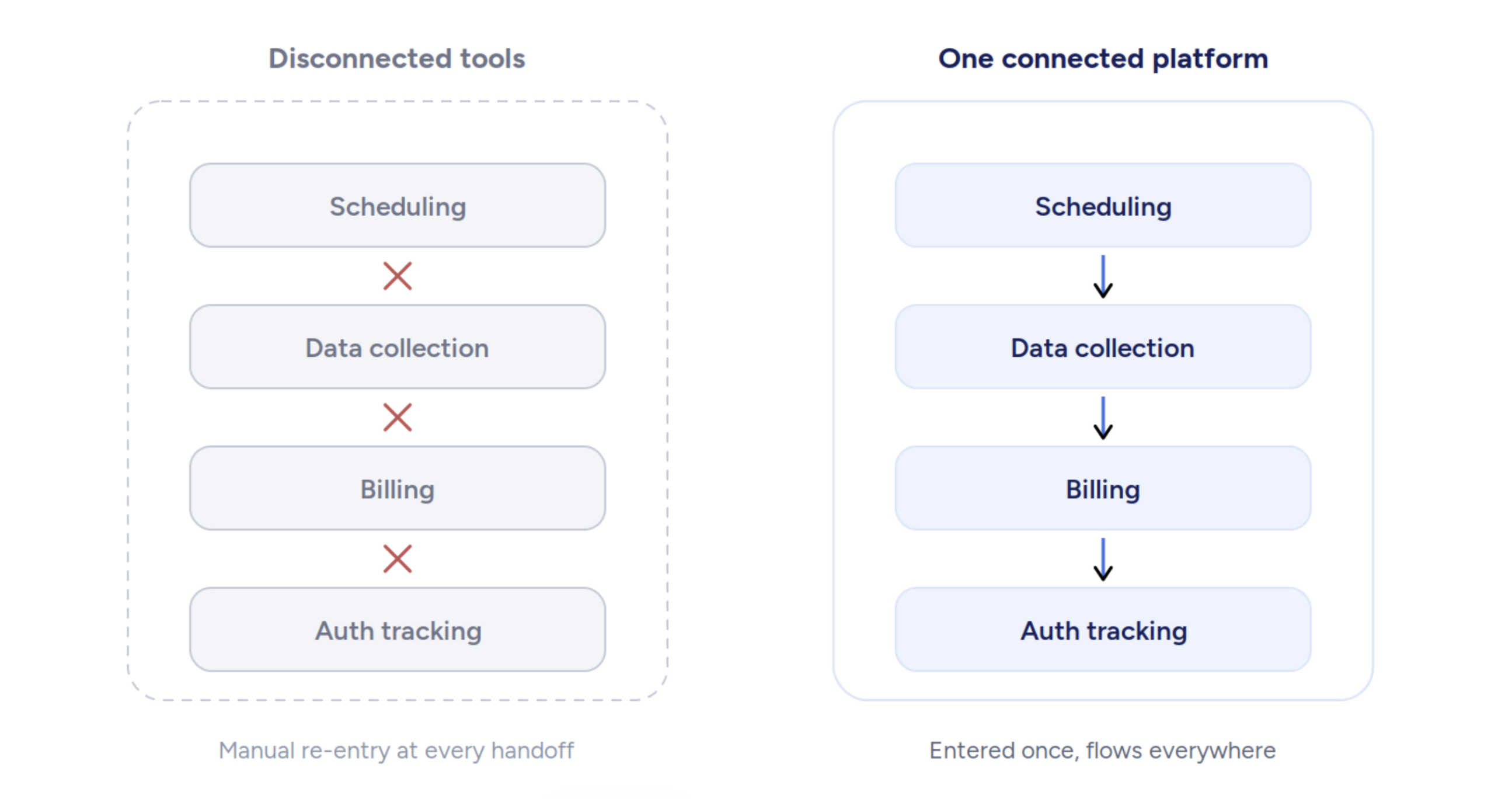
A purpose-built, HIPAA-compliant ABA platform consolidates four functions: scheduling, clinical data collection, electronic billing, and authorization tracking into one environment. When those functions share data, the administrative overhead of manually transferring information between systems disappears. Session notes flow into claims. Authorization limits govern the schedule automatically. Clinical progress graphs appear without manual charting.
Understanding why your ABA practice needs practice management software starts with recognizing what manual workflows actually cost: ABA staff turnover averaged 77% to 103% annually in 2024, driven heavily by administrative overload. The global practice management system market reached $14.45 billion in 2024, reflecting how broadly healthcare organizations are investing in this infrastructure. Within that, ABA-specific platforms are growing at their own accelerated pace as providers recognize that general healthcare tools don't map to the time-based, authorization-heavy structure of ABA billing.
Theralytics was built specifically for this environment, combining clinical data collection and practice management in one platform, designed by BCBAs who understood that the standard EHR model doesn't fit ABA workflows.
Features That Produce Results
Scheduling errors, billing gaps, missing clinical data, and authorization lapses don't stay isolated - each one amplifies the others. The key features of ABA practice management software worth prioritizing aren't individual modules - they're the connections between those modules.
The U.S. ABA software market was valued at $456.14 million in 2024 and is projected to reach $960.20 million by 2032, with demand largely driven by practices abandoning disconnected workflows. Software management adoption is accelerating as a result. What follows is what each area needs to deliver, and what it looks like when the tools boost ABA practice efficiency in practice.
Scheduling and Staff Utilization
Matching clients and staff based on geographic location, skill level, and authorization limits does more than fill slots; it maximizes billable hours and reduces the burnout that comes from chaotic, mismatched caseloads. Recurring schedule templates, multi-location filtering, and authorization-linked booking stop therapists from being scheduled outside approved service windows before a session ever starts. That's how smart scheduling prevents burnout: it removes the daily friction of correcting mismatches, expired auths, and unrendered sessions at the end of day.
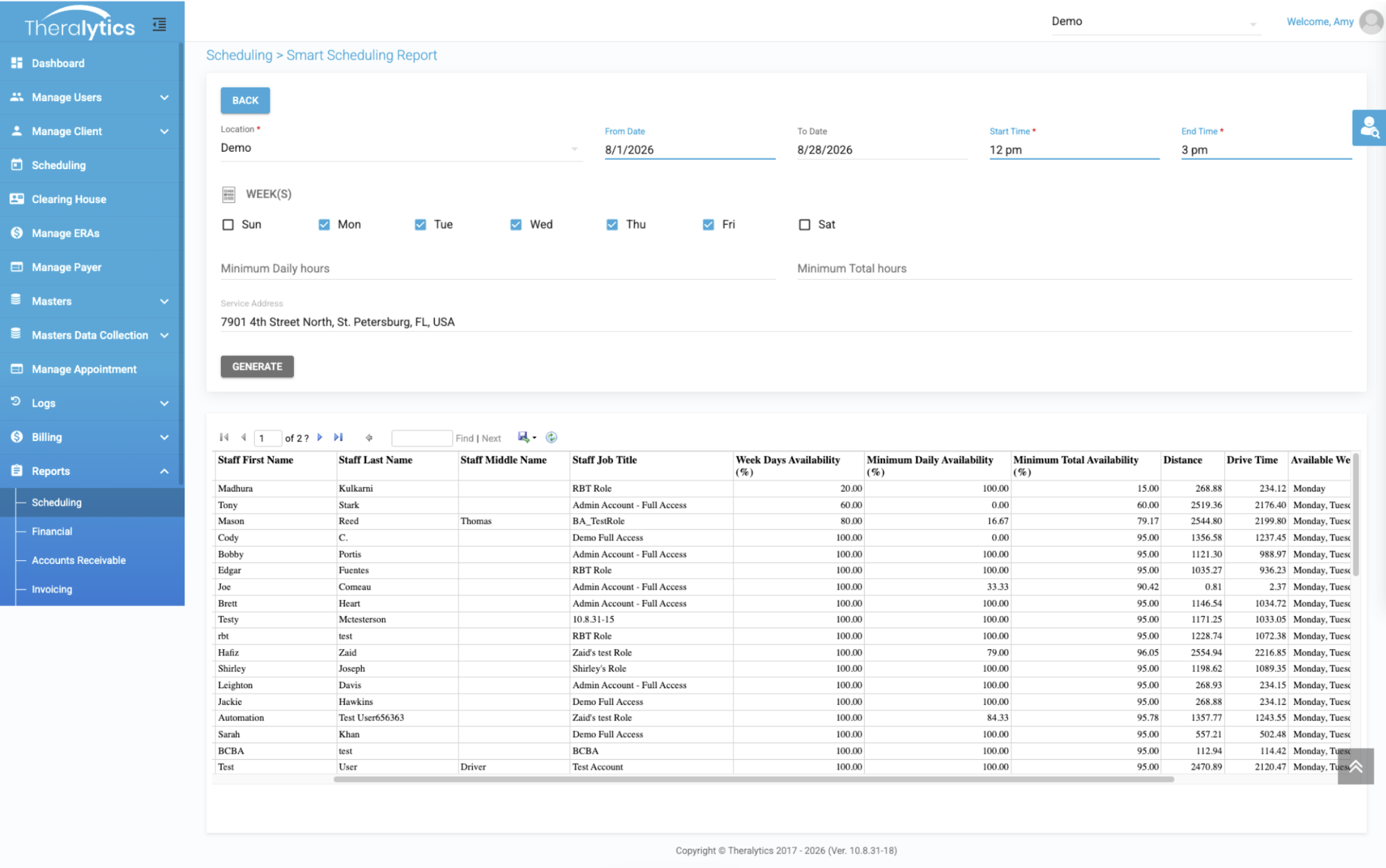
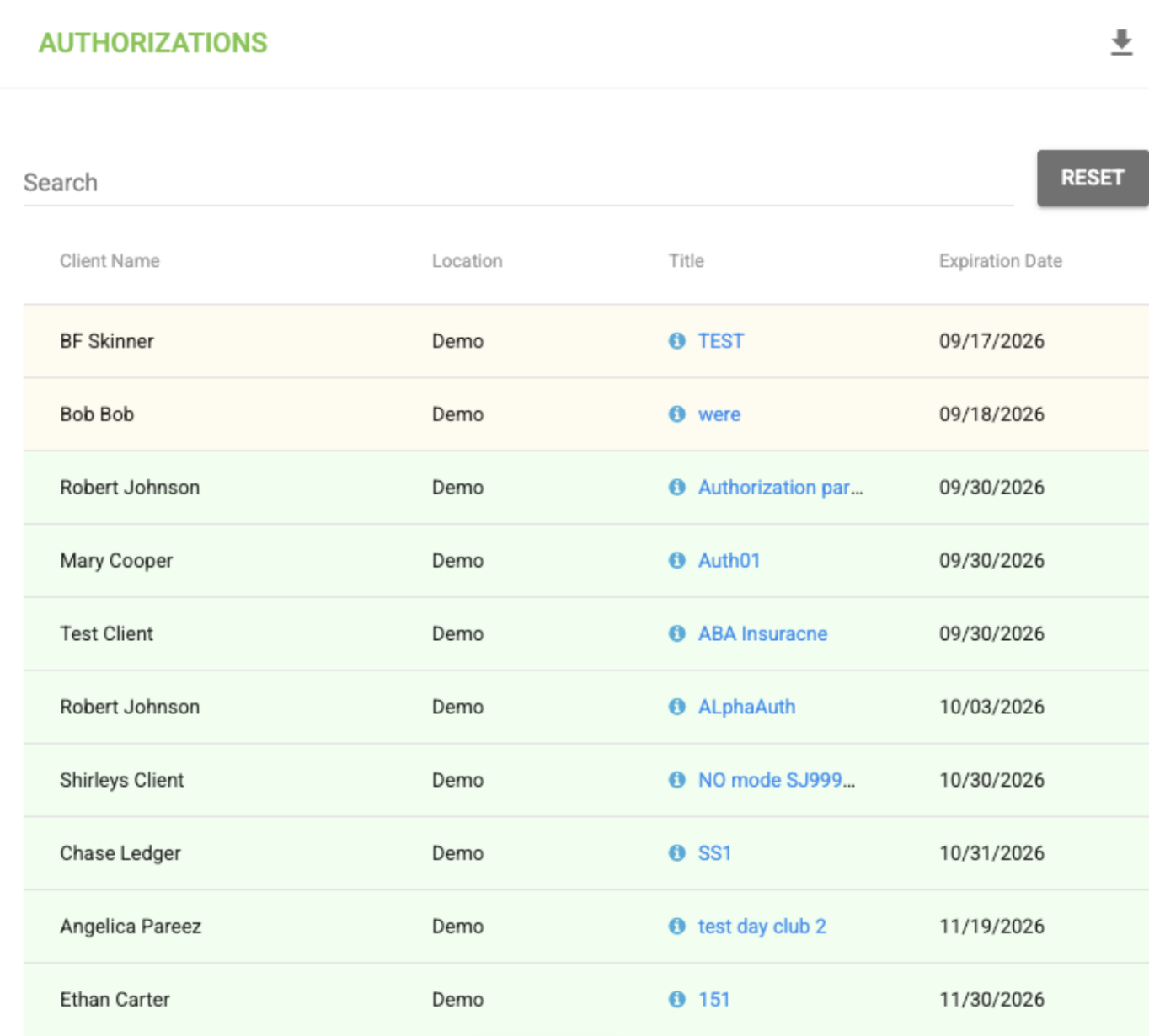
Theralytics enforces authorization limits and caseload assignments directly at the point of booking through built-in permission management and customizable staff schedules. By catching errors before sessions happen, instead of fixing them after the fact, your operations run smoothly and accurately. Paired with real-time authorization trackers and scheduling reports, nothing ever flies under your radar.
Billing, Claims, and Revenue Cycle Management
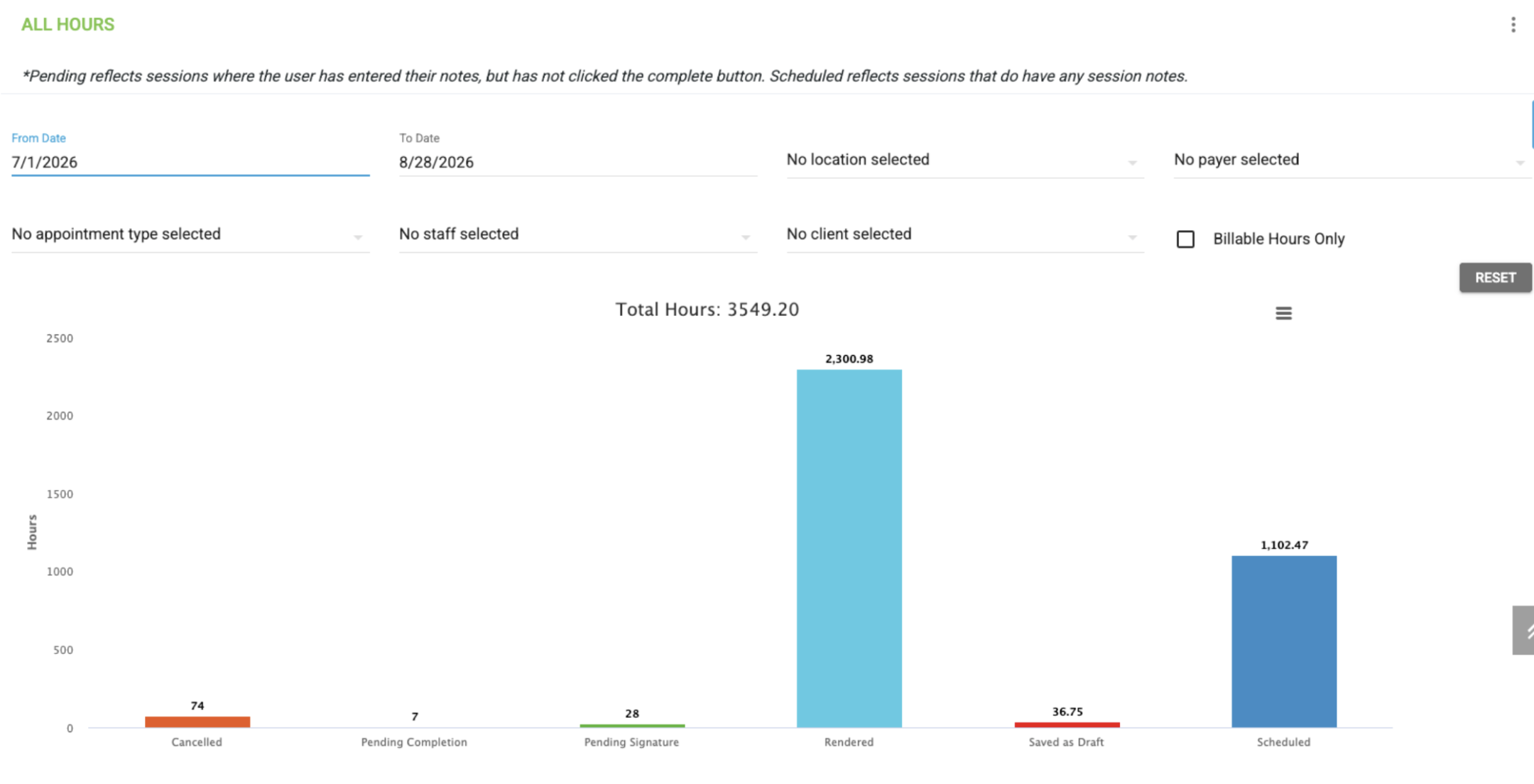
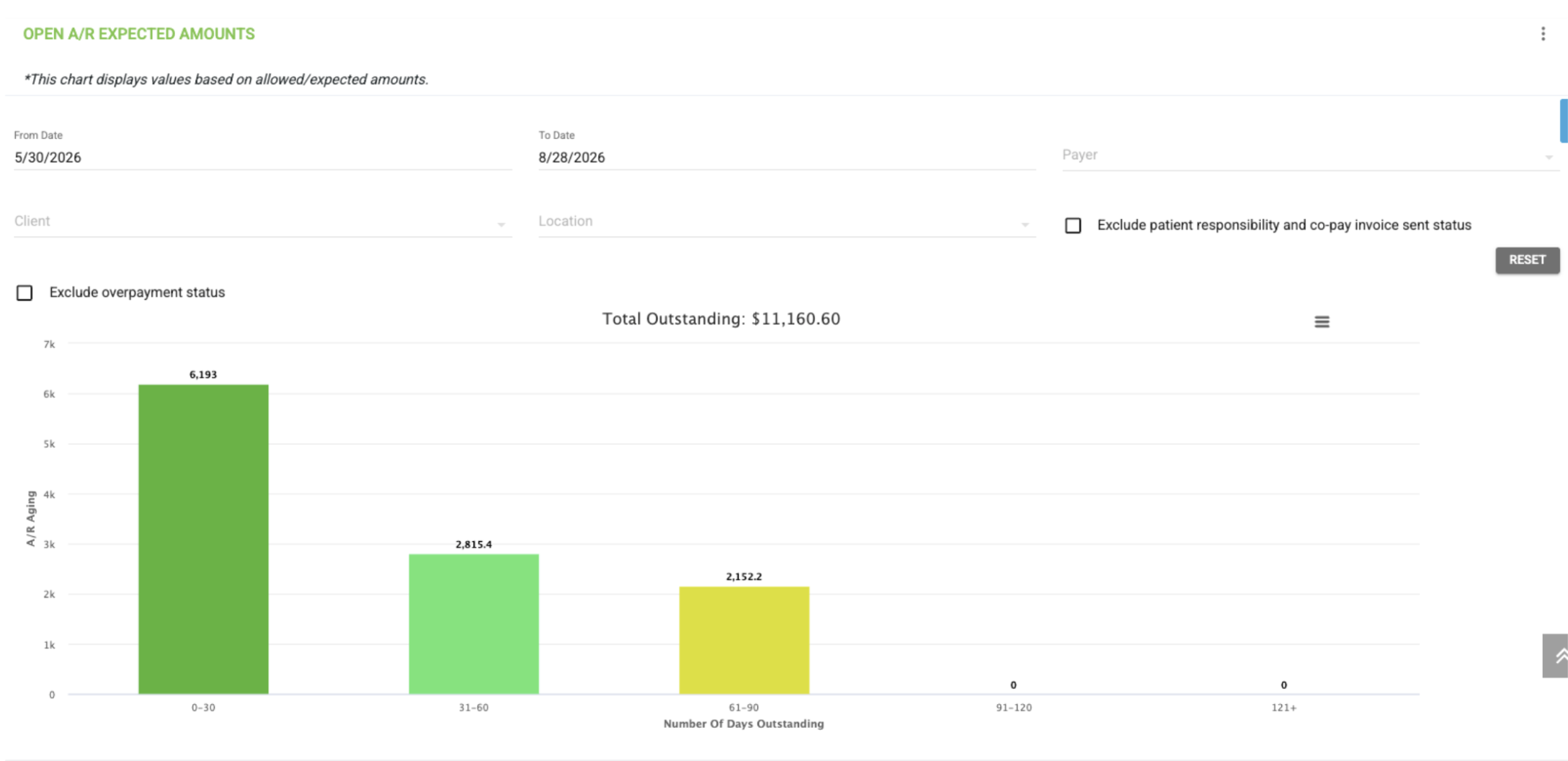
Integrated billing auto-generates claims straight from completed session notes, so the data a therapist enters during care becomes the claim. Real-time insurance eligibility verification catches coverage problems before a session rather than after - and setting up client insurance coverage correctly from the outset is what makes that verification reliable. Accounts receivable dashboards show which claims are aging, which payers are slow, and where follow-up is needed - turning revenue cycle management from a reactive scramble into a managed process. Clean claims submitted faster means shorter payment cycles and fewer denial rework loops.
Clinical Data Collection and Progress Tracking
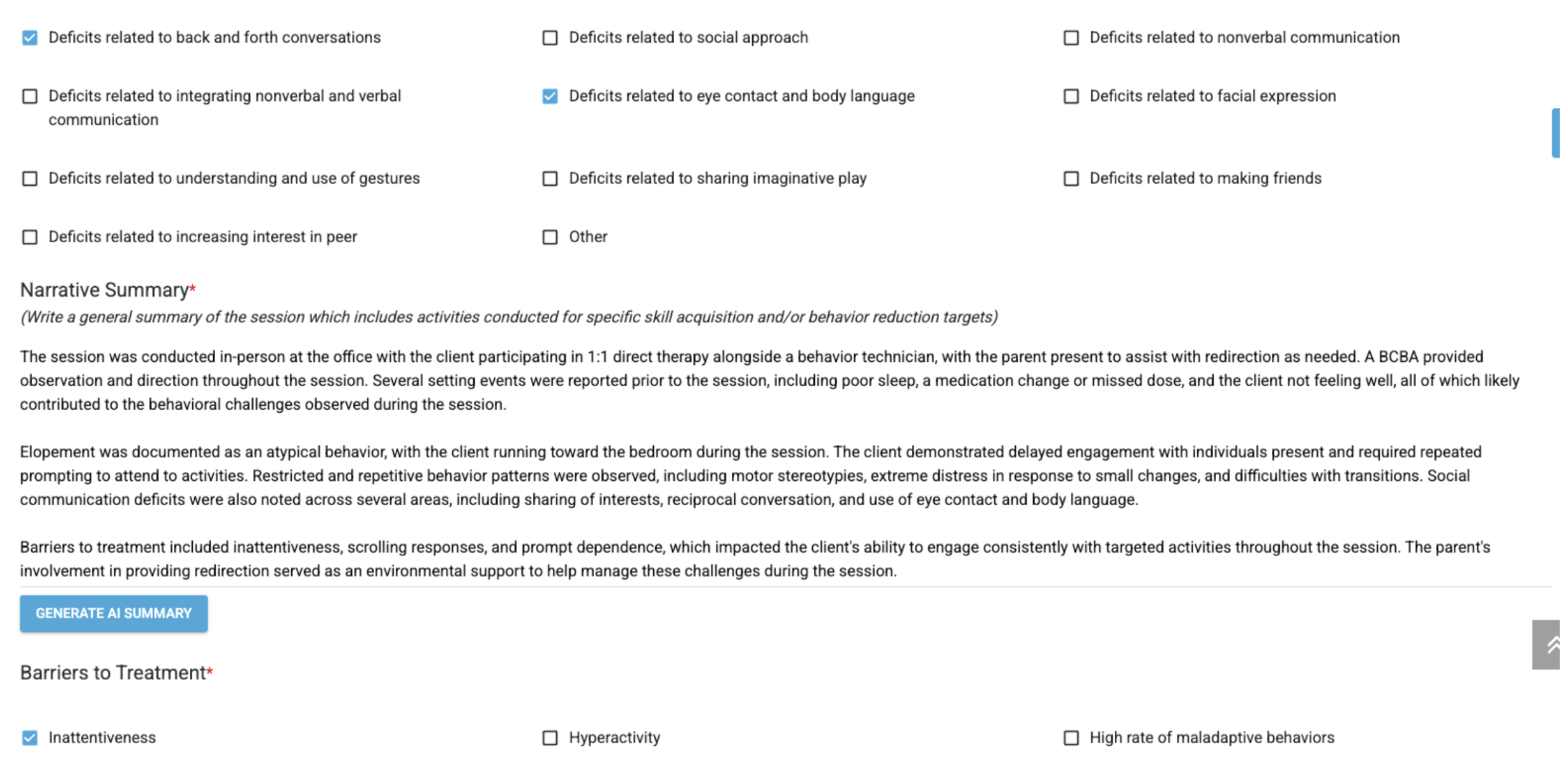
Real-time digital data collection is where clinical and administrative workflows converge. When RBTs record trial data at point-of-care data collection with ABC data, that data feeds immediately into progress graphs, treatment plan reviews, and session records that trigger billing. Dropping the separate data collection tool eliminates double-entry and the documentation gaps that auditors flag. AI-powered ABA practice management pushes this further: AI-assisted session note drafting cuts BCBA documentation review time from roughly 10 hours per week to approximately 3 hours, returning 7 billable hours weekly. That reclaimed clinical time flows directly into the revenue numbers, a connection explored in more depth below under financial performance.
Authorization and Compliance Management
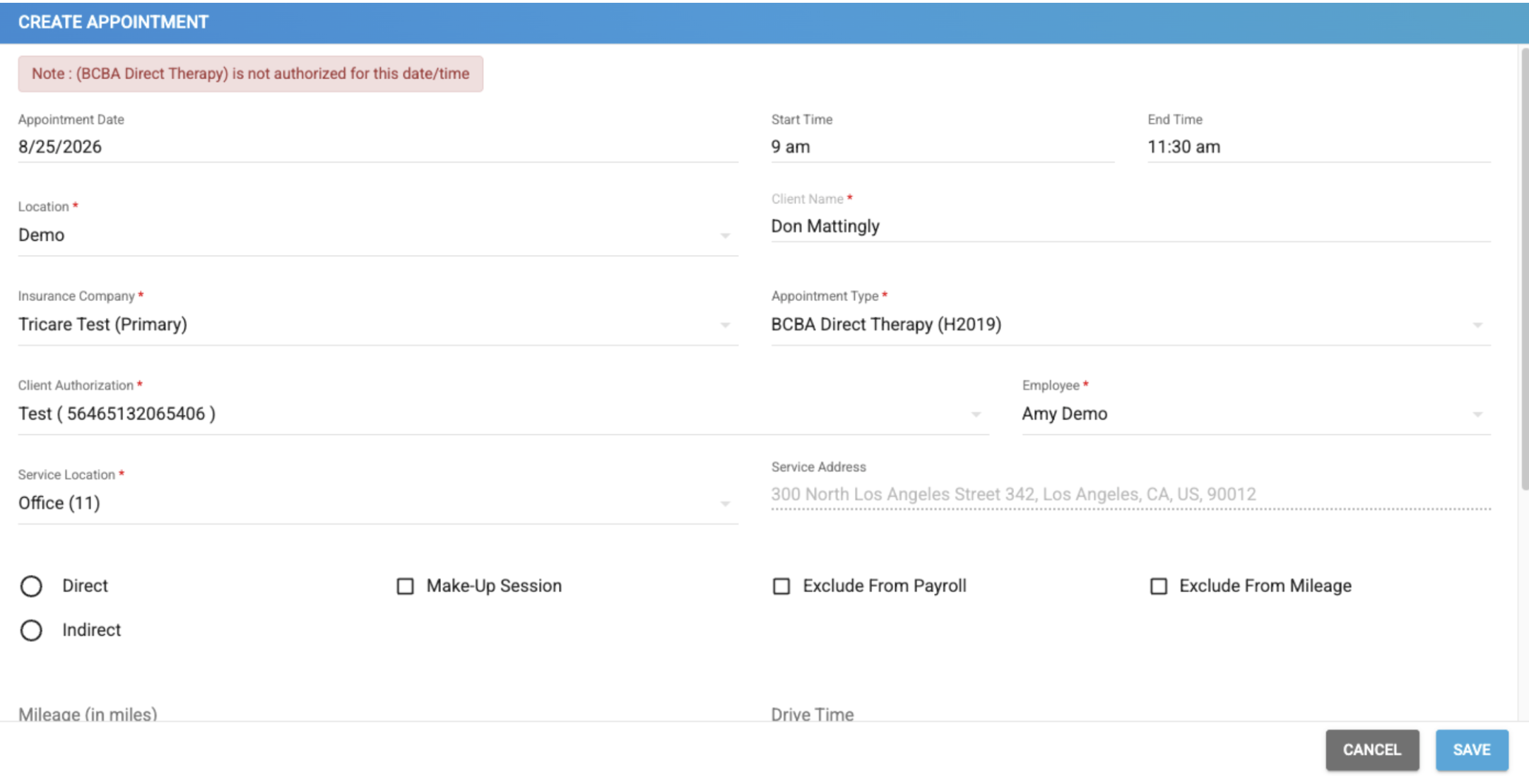
When authorization limits are enforced at the scheduling and billing layer simultaneously, out-of-scope care delivery becomes structurally difficult - not just a policy reminder clinicians have to remember. Managing authorization expirations and service codes is the operational task; real-time unit tracking is how the system enforces it automatically. Authorization tracking and unit monitoring flags approaching limits so staff can request renewals before service gaps force cancellations - and before a payer audit surfaces services rendered outside approved parameters.
What Measurable Improvements Can ABA Practices Realistically Expect?
Realistic operational outcomes after full setup include reduced cancellation rates, faster claim turnaround, and measurably cleaner first-pass acceptance. Tracking the right KPIs is the mechanism; without baseline measurements, improvements are invisible.
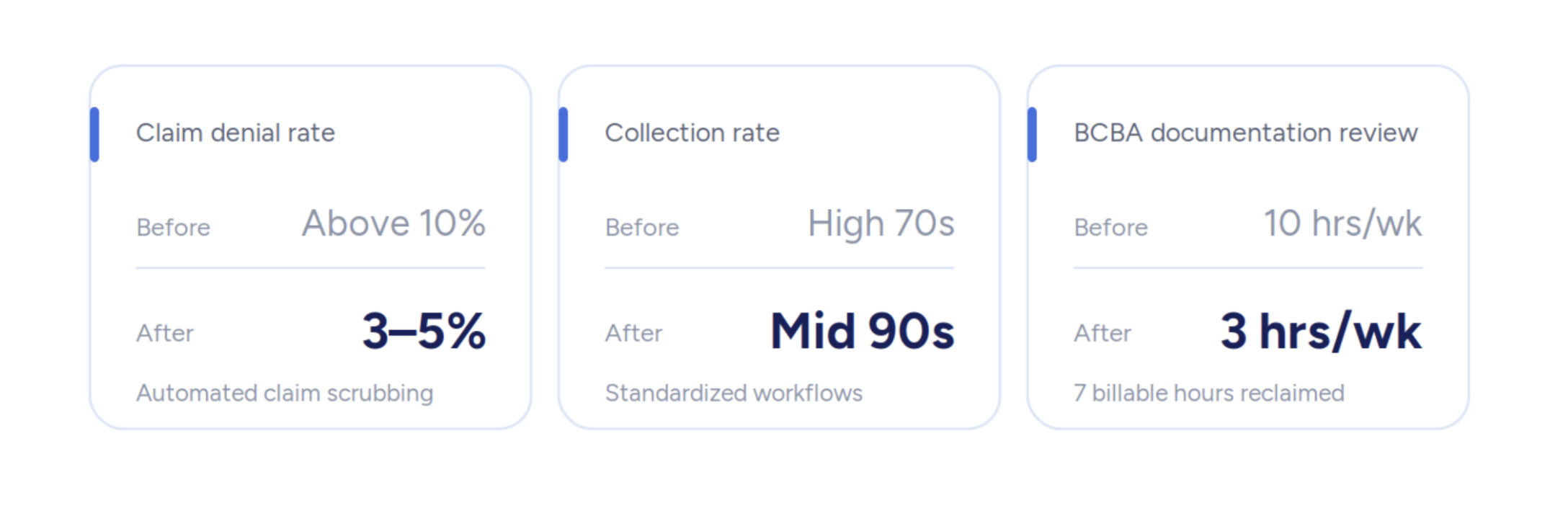
According to ABA industry claims data, practices that implement automated claim scrubbing routinely pull denial rates from above 10% down into the 3% to 5% range. RCM benchmarks from ABA-specific billing services show collection rate improvements from the high-70% range into the mid-90s once standardized billing workflows replace ad hoc processes - and achieving high collection rates in ABA billing depends on that kind of systematic accuracy at every stage of the revenue cycle. Authorization burn-down tracking - knowing exactly how many units remain across every active auth, prevents the end-of-period scrambles that generate both service gaps and billing errors. ABA practices managing rising cost pressures find that billing accuracy is one of the few revenue levers fully within their control; Theralytics addresses this directly through its flexible billing system that automates claims across different cycles, reducing the manual touchpoints where errors typically enter. And per ABA therapy market trend analysis, practices on integrated platforms consistently outperform those running disconnected billing and documentation stacks on both financial and clinical outcome measures.
How to Evaluate and Select the Right Software for Your Practice
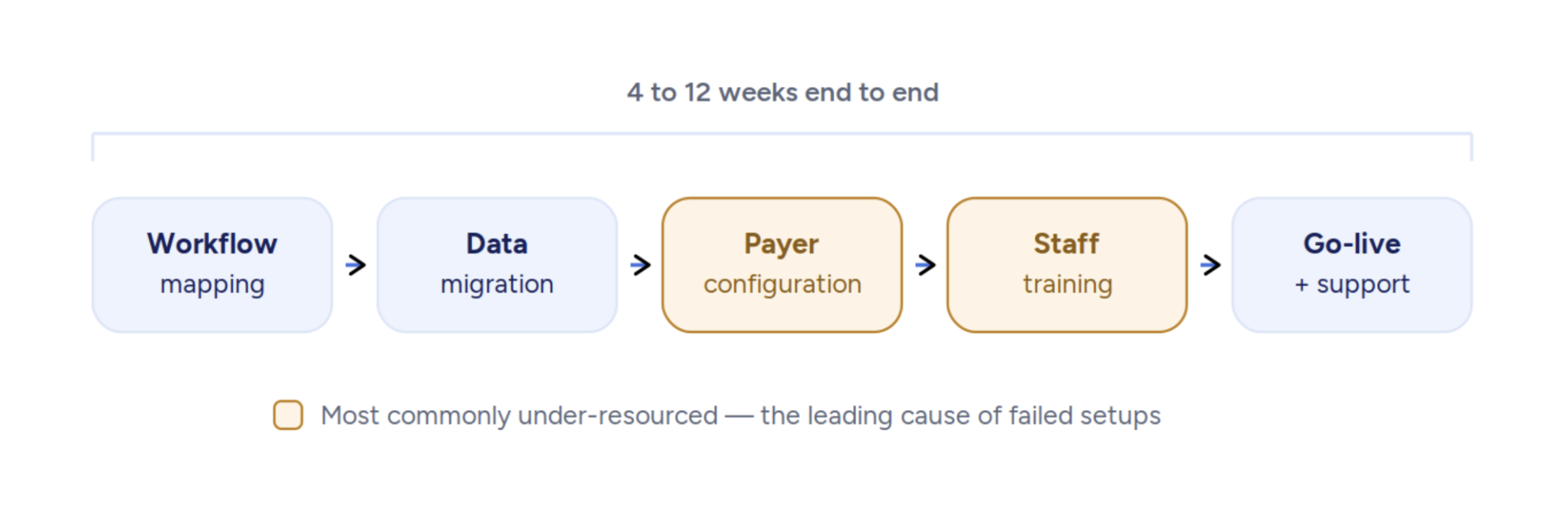
Documentation and authorization gaps remain the leading cause of ABA claim denials. Multi-location scheduling and cross-state billing require software that handles nuanced, payer-specific rules rather than generic templates. Moving to an integrated system takes 4 to 12 weeks, and taking time to set it up correctly prevents operational chaos later. Theralytics supports your transition every step of the way with a complete onboarding and migration process included in your subscription at no additional charge.
Identify Your Practice's Biggest Workflow Gaps
Start with where hours disappear: missed eligibility checks, manual auth tracking, delayed session notes, or AR sitting past 60 days. Map each gap to a software capability before evaluating any vendor. Per ABA therapy billing services benchmarks, practices that enter a software selection process without a defined workflow problem list frequently purchase the wrong tier of platform. RCM software evaluation frameworks suggest treating claim scrubbing, denial tracking, and payment posting as non-negotiable billing requirements.
Prioritize Security, Compliance, and Data Integrity
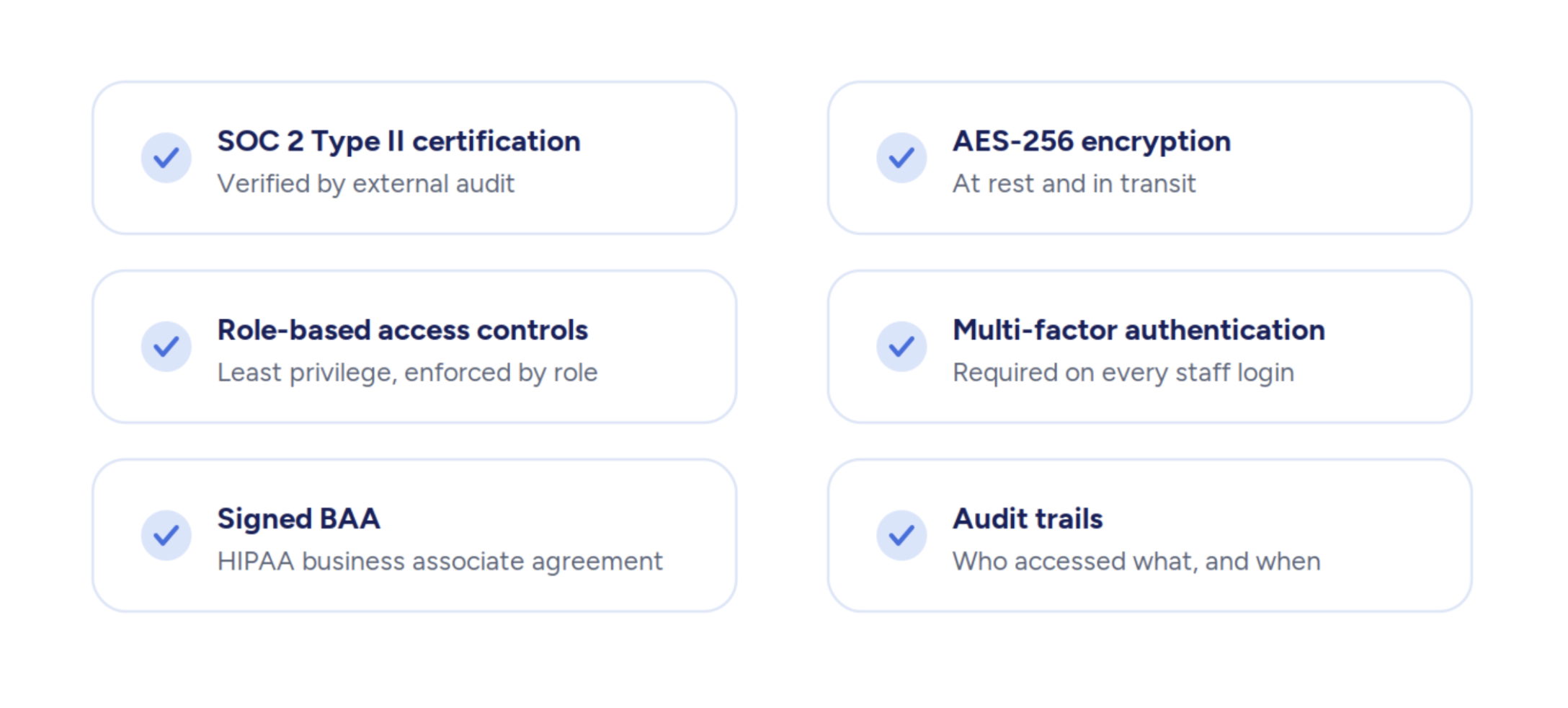
SOC 2 Type II certification is the standard to require; it provides independent verification that security controls are actively maintained, not just self-attested. AES-256 encryption, role-based access controls, MFA, and a signed Business Associate Agreement are baseline requirements under HIPAA. The security questions every ABA practice should be asking go beyond a vendor's compliance checklist to how incidents are handled and how access is audited. Theralytics is built as a SOC 2-compliant platform with role-based access controls and audit trails embedded in its workflows, giving practices the security foundation that secure ABA practice management requires from day one!
Test Ease of Use and Staff Training Support
A platform your RBTs won't use consistently is a compliance liability. Require a live demo with real workflows - scheduling, session note completion and clinical documentation, data entry - before committing. Ask vendors specifically about staff training timelines, available training materials, and whether implementation support is included or billed separately.
Common Mistakes That Undermine Practice Management Setup
The most common failure points aren't technical. They're operational.
Practices that skip workflow standardization before go-live import their existing chaos into the new system. Payer-specific billing rules, rendering provider requirements, modifier configurations, Tricare workflows, EPSDT referral tracking, left unconfigured, these produce the same denials the practice had before. Staff who aren't properly trained on session note completion create documentation gaps that surface weeks later as billing rejections. And those gaps compound: a single unconfigured payer rule can generate weeks of rework across dozens of claims before anyone isolates the source.
The hidden challenges that nearly ended one ABA practice trace directly to billing, documentation, and compliance gaps that consolidated software is designed to prevent, but only when it's configured and used correctly. Secure ABA practice management for startups makes a point that applies to practices of every size: security and compliance controls need to be built in from day one, not added after problems surface. Healthcare RCM market research consistently ties setup failure to under-investment in training and configuration, not to the platform itself. Across Gartner Peer Insights RCM reviews, practices reporting poor results on practice management software point to incomplete payer configuration and weak staff adoption as the leading causes.
Getting the Most Value From Your Practice Management Software
The best-practice tier separates practices that use software to hold the status quo from those that use it to genuinely improve. Point-of-care task automation - completing notes, entering data, and capturing signatures at the session - matters because delays compound fast. A session note entered 48 hours later is a documentation gap waiting to be flagged. Eliminating separate data collection and billing tools isn't just a preference; it's a compliance necessity when payer audits are on the table.
Workforce operational efficiency for ABA clinic teams and strong ABA billing service practices share a foundation: standardized workflows that don't depend on individual staff knowledge. The healthcare RCM software market reflects growing adoption of integrated platforms precisely because disconnected billing tools carry compounding risk as practices scale.
Standardize Your Workflows Before Going Live
Map every workflow - scheduling, session delivery, note completion, claim generation - before touching the software configuration. Defined steps at each stage mean new staff follow the same process as experienced staff from their first shift.
Use Data and Reporting to Spot Inefficiencies
Your reporting dashboard is the earliest warning system available to a practice manager. RCM software analysis shows that practices actively monitoring denial rates and AR aging outperform peers on collection rates by a consistent margin. Rising claim denial rates across behavioral health make denial tracking non-negotiable. And mastering ABA billing and insurance claims inside a single platform gives you that visibility without toggling between systems.
Connect Clinical Care to Financial Performance
RBTs and BCBAs should complete notes and enter session data inside the practice management app at the point of care, not hours later, and not in a separate tool. Claim generation and ready-to-bill workflows depend on that session data being accurate and complete, because the clinical record becomes the direct source of truth for the claim. Revenue leakage from documentation gaps closes when that connection is real, not a manual export step.
Frequently Asked Questions
How much does ABA practice management software typically cost, and what should I budget for?
Pricing varies by platform tier and practice size. The table below reflects currently published pricing structures as of August 2026.
| Platform Tier | Typical Pricing Model | Example Range |
|---|---|---|
| Standalone practice management | Per client/month | $20 to $30 per client/month |
| Combined PM + data collection | Per client/month | $30 to $60 per client/month |
| Full RCM / billing services | Percentage of collections | 4% to 8% of receivables |
| Enterprise / multi-location | Custom contract | Not published uniformly |
Budget for training time, staff development, and any clearinghouse fees not included in the base subscription. Some vendors charge separately for ERA enrollment and secondary claim submission.
Can practice management software integrate with the tools we're already using?
Most purpose-built ABA platforms support connection with major clearinghouses (Office Ally, ClaimMD, and others) and with external EHR systems through standardized APIs. But connection depth varies. Ask specifically: does the connection push data both ways, or only in one direction? Does it require custom API work, or is the connection pre-built? ONC-certified platforms meet federal interoperability standards, which simplifies data exchange with other certified systems.
What happens to our patient data if we switch to a different software platform later?
HIPAA gives patients the right to access their records, and your vendor is obligated to support data export. Ask for specifics before signing: what formats does the platform export, CSV, HL7, FHIR? Is bulk EHI export available? What's the timeline for a full data migration? ONC certification requires electronic health information export functionality, so certified vendors must support it. Get the data portability terms in writing before you commit.
Conclusion
Running your ABA operations with practice management software comes down to one decision: building workflows where clinical and financial data connect from the first moment of service delivery. That connection - session data generating claims, authorization limits governing schedules, metrics surfacing problems before they become denials - is what separates practices that collect consistently from those that don't. Theralytics brings scheduling, clinical data collection, billing, and compliance into a single platform built specifically for how ABA operates. If you're ready to see what that looks like for your practice, book a free 15-minute discovery call and we'll walk through it together.