


ABA billing compliance is not just a back-office concern. It directly affects how much revenue your practice collects, how quickly you get paid, and whether your practice survives a payer audit. Real-time data collection that connects clinical documentation to billing from the moment a session ends is one of the most reliable ways to stay compliant before problems surface.
The compliance environment for ABA providers is tightening. Medicaid programs across multiple states have published new regulations, payers are using more sophisticated auditing tools, and the industry as a whole is being pushed toward outcomes-based accountability. Practices that manage compliance reactively, fixing problems after claims are denied or audits are triggered, face a much harder path than those that build compliance into their daily workflow from the start.
This guide covers what ABA billing compliance actually involves, where practices most commonly fall short, the KPIs you should be tracking, and the proactive steps that protect your revenue and your clinical reputation.
What ABA Billing Compliance Covers
ABA billing compliance refers to adherence to the regulatory, contractual, and medical documentation standards that govern how ABA services are billed and reimbursed. It spans several overlapping areas.
HIPAA: Protected health information used in billing must be handled, stored, and transmitted according to HIPAA requirements. This includes administrative, physical, and technical safeguards such as data encryption and access controls. Every team member who touches billing data requires documented HIPAA training.
Medicaid and payer requirements: Each payer has specific rules about which services require prior authorization, which CPT codes apply, what documentation must accompany a claim, and what credentials the rendering provider must hold and included on the claim. These rules vary by payer and by state and change regularly.
BACB ethical standards and Federal Healthcare Programs: The BACB Ethics Code and Federal Healthcare Programs require strict adherence to standardized coding, documentation and accurate billing compliance to reflect client services, eligibility, and claims submission. The BCBA Ethics Code promotes only billing for services that are medically necessary, accurately documented, and delivered as described. Billing for services not rendered or misrepresenting the nature of services provided is an ethical violation as well as a legal one.
Documentation standards: Session notes must include accurate start and end times, the provider's credentials, a supervisor's signature where required, and documentation that directly supports the billed service. Notes that are vague, incomplete, or generated after the fact create risk and compliance exposure.
The 2026 Regulatory Shift: From Fee-for-Service Toward Outcomes
The ABA industry is at a regulatory inflection point. Other healthcare sectors have moved toward shared risk and pay-for-performance reimbursement models with publicly reported outcomes. Funders have identified ABA providers as lacking in global outcomes reporting, under-investing in family programming, and driving rising costs through in-clinic service frameworks.
The result is tighter regulations applied broadly across Medicaid programs. Payers are auditing claims more aggressively, scrutinizing authorization utilization, and pushing for evidence that services are producing functional outcomes for clients.
This shift has a direct compliance implication: practices that only track service visits and hours are increasingly exposed. Practices that know their own data, including average length of stay, cancellation rates by client and provider, graduation rates, and global functional improvement metrics at reassessment and discharge, are better positioned to address what funders are looking for before those funders point it out and take action.
Your data tells a story. Knowing what that story says before a payer audits your claims is a significant compliance advantage.
The Three Categories Behind Most ABA Claim Denials
Most billing compliance failures fall into three categories. Each is addressable through process rather than through clinical quality changes.
Eligibility and Coordination of Benefits Denials
Eligibility denials have nothing to do with the quality of care delivered. They are process failures. Insurance coverage changes, plan changes, and coordination of benefits issues all create eligibility problems that generate denials.
Three steps address most eligibility denials:
- Ask during Family Guidance whether there have been any changes in insurance plan, coverage, or funder.
- Check the funder portal on a regularly scheduled basis for any coverage changes.
- Call payers when you encounter unfamiliar plans or out-of-network benefit questions. Ask the questions before you bill, not after.
Verify benefits eligibility and coverage at a minimum quarterly, and at the start of every authorization period.
Authorization Denials
Authorization issues account for approximately 15% of provider denials. They are also process failures, not clinical ones.
The most common authorization problems are: not knowing which payers require prior authorization for which services, billing with the wrong NPI when a new clinician begins rendering services, and allowing the schedule to exceed authorized units within a funder's authorization period.
Address authorization denials by:
- Maintaining a clear internal record of which payers require prior authorization and for what service codes
- Building a process to update the rendering provider NPI on authorizations when clinician assignments change
- Using scheduling tools that flag when a client's authorized units are approaching their limit
- Submitting authorization renewals before the current authorization expires, not after
Network provider manuals, funder websites, and billing manuals are the source of truth. Build an internal reference document from these sources so your team is not relying on memory or institutional knowledge that walks out the door when staff turn over.
Credentialing Denials
Credentialing denials occur when a claim is submitted by a provider who is not yet credentialed with the payer, when the NPI type (Type 1 individual vs. Type 2 group) is incorrect, or when there is a mismatch between the taxonomy code and the NPI on file.
Address credentialing denials by:
- Confirming that every team member billing is credentialed before their first claim is submitted
- Ensuring the correct NPI type is linked to each claim
- Verifying that taxonomy codes and NPI numbers are correctly linked in your billing system
- Adding new team members to your system and completing credentialing before they begin rendering billable services
Credentialing takes time. Build the timeline into your hiring process so new clinicians are not held out of billing longer than necessary and so claims are not submitted for uncredentialed providers.
KPIs Every ABA Practice Needs to Monitor for Billing Compliance
Tracking the right metrics gives your practice advance warning of compliance problems before they become audit triggers or cash flow crises.
Defect Rate: The percentage of claims containing billing errors. A high defect rate signals process failures in coding, documentation, or data entry that will result in denials and rework.
First Pass Yield (FPY): The rate at which claims are accepted and paid on the first submission without correction or resubmission. High FPY reflects accurate claims preparation and compliance with payer requirements. Low FPY means your team is spending time fixing claims that should have been clean the first time.
Claim Acceptance Rate: The percentage of claims accepted on first submission. Closely related to FPY, this metric reflects the overall accuracy of your billing process.
Denial Rate: The proportion of submitted claims that are denied. Track this by denial reason so you know whether denials are clustering around eligibility, authorization, credentialing, coding, or documentation issues. The pattern tells you where the process failure is.
Days in Accounts Receivable (DAR): The average time between service delivery and payment collection. A high DAR signals that claims are sitting too long in the billing cycle, either because of denials, slow follow-up, or payer processing issues. Lower DAR means faster cash flow.
Collection Rate: The proportion of the total amount billed that is actually collected. This is the bottom-line measure of billing effectiveness.
Authorization Utilization Rate: Percentage of the authorized hours for each client that are actually provided. Consistently underutilizing authorizations is a clinical and financial problem. Consistently exceeding them is a compliance problem.
A Quality Assessment and Performance Improvement Framework for ABA Billing
Compliance does not maintain itself. It requires a structured quality assessment and performance improvement (QAPI) plan and process that promotes early identification of potential concerns and builds consistent processes and application across the team.
Regular Audits
Conduct internal billing audits at least monthly. Review a sample of claims across providers, service types, and payers. Look for coding inconsistencies, documentation gaps, authorization mismatches, and NPI errors. Internal audits provide continuous oversight and immediate feedback.
External audits, conducted by a third party, provide an objective evaluation of your billing practices and surface problems that internal reviewers may overlook or normalize over time. Schedule an external audit at least annually.
Pre-Bill Auditing
Build a pre-bill audit step into your workflow before claims are released to your billing team or RCM partner. This is where the most impactful compliance work happens. Catching a credentialing error, an authorization mismatch, or an omission of a documentation standard before the claim goes out costs almost nothing. Catching it after a denial costs time, money, and sometimes the payment itself.
Staff Training
Billing staff need ongoing training, not just onboarding. CPT codes for ABA services change. Payer-specific requirements update. State Medicaid policies shift. Build a regular training cadence that keeps your team current.
Training should cover coding guidelines and common errors, payer-specific authorization requirements, documentation standards that support medical necessity, and the complete billing cycle from session to payment posting.
Documentation Standards
Every session note that supports a billed service must include the exact start and end time, the rendering provider's name, signature with credentials, a supervisor signature where required, the specific interventions delivered, and documentation that connects the session to the client's treatment goals. Notes that are vague, templated without individualization, or completed days after the session create audit exposure.
ABA documentation management software that keeps session notes connected to billing records in the same platform reduces the gap between what is documented and what is billed.
How Technology Reduces ABA Billing Compliance Risk
Manual billing processes introduce errors that compound over time. When eligibility checks, authorization tracking, session documentation, and claim submission happen in separate systems or on paper, data gets lost, transcribed incorrectly, or simply not checked.
ABA billing software that connects scheduling, clinical documentation, and billing in one platform removes most of the manual handoffs where compliance errors occur. Session notes flow directly into the billing module. Authorization limits are visible at the point of scheduling. Credentialing status is linked to provider assignments.
Automated eligibility verification, real-time authorization tracking, and denial management workflows cut the workload on billing staff and produce cleaner claims. The result is higher first pass yield, lower denial rates, and faster collection.
AI-assisted tools that identify coding anomalies or flag claims that fall outside expected billing patterns give practices an additional layer of compliance review before claims reach the payer.
ABA Billing Compliance Checklist
Use this checklist as a recurring reference across your billing workflow.
Eligibility and Coverage
- Verify benefits eligibility at intake, at the start of each authorization period, and at least quarterly
- Ask families about insurance provider and plan changes during every Family Guidance session
- Check funder portals regularly for plan or coverage changes
Prior Authorization
- Maintain an internal record of which payers require prior authorization for which service codes
- Submit authorization requests and renewals before the current authorization expires
- Track authorized units per client and alert the scheduling team before limits are approached
- Update authorization records when the rendering provider changes
Credentialing
- Confirm every billing provider is credentialed before the first claim is submitted
- Verify NPI type (Type 1 or Type 2) is correctly assigned for each claim
- Confirm taxonomy codes are correctly linked to NPI numbers in your billing system
Documentation
- Include exact start and end times on every session note
- Document the rendering provider's name, signature, and credentials and supervisor signature where required
- Connect session content to the client's active treatment goals
- Complete notes within the required timeframe, not days after the session
Coding
- Use the correct CPT codes for each service type and setting; ensure team members understand what is included in the bundled codes
- Apply the correct modifiers as required by each payer
- Stay current with annual CPT code updates and payer-specific billing requirement changes
Auditing
- Conduct internal billing audits at least monthly
- Schedule an external billing audit at least annually
- Run a pre-bill audit before releasing claims to RCM
- Track denial reasons by category and review patterns monthly
Staff Training
- Provide billing staff training at onboarding and at least twice annually
- Update training when payer requirements or CPT codes change
- Document all training for compliance records
How Theralytics Supports ABA Billing Compliance
Billing compliance is easier to maintain when the systems your clinical and billing teams use are connected. When session documentation, scheduling, authorization tracking, and billing live in separate tools, information gets lost between them and compliance gaps open up.
Theralytics connects scheduling, clinical documentation, data collection, and billing in one platform so session notes flow automatically into billing records, authorization limits are visible at the scheduling level, and pre-bill checks happen as part of the workflow rather than as a separate manual step.
Authorization Tracking Before It Becomes a Compliance Issue
Theralytics helps practices monitor authorization usage by showing scheduled, rendered, and completed hours against authorized amounts. This allows teams to identify underutilization, prevent exceeding authorized units, and address authorization issues before billing problems occur.
Built-In Reporting for Billing Oversight
Compliance requires visibility. Theralytics reporting tools help practices review billing activity, payments, outstanding balances, authorization utilization, and session records from one system.
Correct Provider Assignment Before Billing
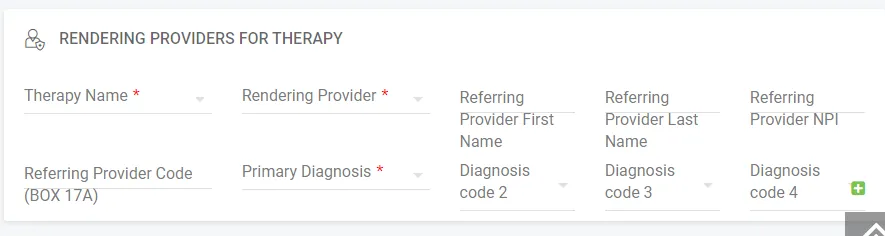
Theralytics allows practices to assign rendering providers within client profiles, helping ensure claims are tied to the correct provider information before submission.
Full-Service Billing
Full-service billing through Theralytics at 4.5% of receivables gives practices access to a billing team with experience navigating payer-specific requirements across all 50 states, alongside software that automates the compliance checks that prevent the most common denial categories.
Book a free 15-minute demo to see how Theralytics supports billing compliance across your practice.
Frequently Asked Questions About ABA Billing Compliance
What is ABA billing compliance?
ABA billing compliance refers to adherence to the regulatory, contractual, and documentation standards that govern how ABA services are billed and reimbursed. It covers HIPAA requirements, payer-specific authorization and coding rules, Medicaid regulations, BACB ethical standards, Federal Healthcare Program guidance, and documentation requirements that support medical necessity.
What is Compliance in Today’s Autism Industry?
Autism and the ABA community are at a crossroads, balancing rapid industry growth with the responsibility to evolve ethically and compassionately. It can be said that there is a fundamental disconnect between the pace of growth and the prevalence of Autism and related therapeutic intensity. While there is likely an argument to be had around historical underutilization, the most recent state Medicaid program publications are resulting in broad brushstrokes being applied, resulting in tighter regulations.
What are the most common causes of ABA claim denials?
The three most common categories are eligibility and coordination of benefits issues, authorization problems, and credentialing errors. Each is a process failure rather than a clinical quality issue, and each is addressable through structured workflows and proactive verification.
How often should ABA practices audit their billing?
Internal billing audits should happen at least monthly. External audits should be scheduled at least annually. Pre-bill auditing before claims are released should be part of every billing cycle. The earlier a compliance issue is caught, the lower the cost of fixing it.
What documentation is required to support ABA billing?
Session notes must include the exact start and end time of the session, the rendering provider's credentials, a supervisor signature where required by the payer, the specific interventions delivered, and documentation that connects the session to the client's active treatment goals. Notes that are vague, incomplete, or untimely create audit exposure.
What KPIs should ABA practices track for billing compliance?
The most important KPIs are first pass yield, denial rate by category, days in accounts receivable, collection rate, defect rate, claim acceptance rate, and authorization utilization rate. Tracking denial reasons by category is particularly useful because it identifies where in the billing process the failures are occurring.
How does technology improve ABA billing compliance?
Platforms that connect scheduling, documentation, and billing eliminate the manual handoffs where most compliance errors occur. Automated eligibility verification, authorization tracking, and pre-bill audit tools catch problems before claims are submitted. Denial management workflows reduce the time and cost of addressing denials that do occur.
What should ABA practices do when a claim is denied?
Identify the denial reason immediately and categorize it. Eligibility denials require verifying current coverage and resubmitting. Authorization denials require checking the authorization record and correcting any NPI or unit limit issues before resubmitting. Credentialing denials require verifying the provider's credentialing status and NPI configuration. Track denial patterns monthly to identify systemic issues rather than treating each denial as an isolated event.